Do you know what DOG ESSENTIALS you are missing out? Find out now!


Zack Keithy, our author, is a certified veterinarian technician (UC Blue Ash) for over 6 years (contact him here). The articles written here are based on his expertise and experience, combined with a review by our expert vet reviewers including Dr M. Tarantino. Learn more about us here.
It has been my pleasure to work with owners to solve leash pulling, barking, and jumping issues for years. Today, why not chat about bowls, for Golden Retrievers mostly.
My friend’s Max became lethargic due to joint pain and developed a selective appetite; I must admit, it was quite painful for me to watch him.
Everything was changed by food made at home which was not only gentle but also delicious.
Let’s learn how to make this, shall we?
Medical Questions? Talk to a Veterinarian 24/7.
Connect one-on-one with a licensed vet who will answer your questions in minutes.
*Article may contain affiliate links to retailers like Amazon and Chewy. Learn more on our disclosure page.
The Principles of a Golden Retriever’s Diet
Protein
Lean beef for digestible amino acids and iron to maintain muscle.
Carbs
Quinoa for steady energy, fiber, and complete protein (brown rice or sweet potatoes work too).
Fats
Omega-3 sources for joints, skin, coat (fish oil supplement ideal).
Vitamins/Minerals
Cooked carrots, green beans, spinach for antioxidants and immune support.
Hydration
Homemade moisture aids older dogs; always provide fresh water.
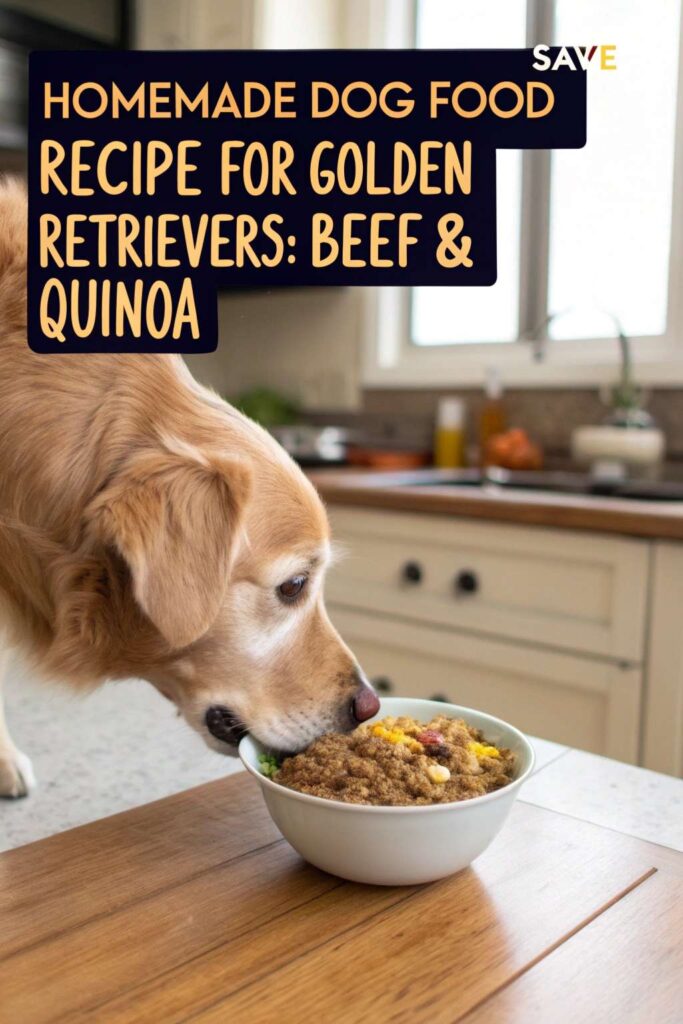
Golden Retriever Gentle Beef & Quinoa Dog Food Recipe
This recipe is one of Max’s favorites, and it’s become a staple in my friend’s household. It’s balanced, easy to make in a big batch, and super gentle on his stomach.
Ingredients:
- 1.5 lbs lean ground beef (85-90% lean)
- 1 cup dry quinoa, rinsed thoroughly
- 3 cups water (for cooking quinoa)
- 2 cups chopped carrots (about 3-4 medium carrots)
- 1.5 cups chopped green beans (fresh or frozen)
- 1 cup chopped spinach (fresh)
- 2 tablespoons olive oil or flaxseed oil (optional, for healthy fats)
- 1/2 teaspoon calcium powder (check with your vet for proper dosage)
- A good quality canine multivitamin (optional, but highly recommended, also vet-approved)
Instructions:
- Cook the Quinoa: First, rinse your quinoa well under cold water. This helps remove saponins, which can taste bitter. In a medium pot, combine the rinsed quinoa and 3 cups of water. Bring it to a boil, then reduce heat to low, cover, and simmer for about 15 minutes, or until all the water is absorbed. Fluff it with a fork and set it aside to cool.
- Brown the Beef: In a large pan or pot, brown the ground beef over medium heat. Break it up with a spoon as it cooks. Drain off any excess fat really well. This is important, especially for seniors, as too much fat can upset their stomach.
- Add the Veggies: Once the beef is browned and drained, add the chopped carrots and green beans to the pot. Cook for about 5-7 minutes, stirring occasionally, until they start to soften. Then, stir in the spinach and cook for another 2-3 minutes until it wilts.
- Combine Everything: Take the pot off the heat. Add the cooked quinoa to the beef and vegetable mixture. Stir everything together until it’s well combined.
- Cool and Supplement: Let the entire mixture cool down completely before adding any supplements. Once cool, stir in the olive or flaxseed oil (if using), the calcium powder, and any liquid or powdered multivitamin you’re using. Make sure it’s mixed in evenly.
Storage and Serving:
This recipe makes a good-sized batch. I usually divide it into daily portions and store it in airtight containers in the fridge for up to 3-4 days. You can also freeze portions for longer storage, which is super convenient. Just thaw in the fridge overnight before serving.
To serve, simply dish out the appropriate portion for your dog. If it’s been refrigerated, you might want to warm it up slightly, but always check the temperature to make sure it’s not too hot. Just a quick zap in the microwave or a stir with a splash of warm water can do the trick.
Important Considerations and Common Mistakes
Consult Your Vet First
Important: receive personalized nutrition advice, mainly for elderly pets with medical conditions, as well as supplement suggestions like calcium and multivitamins.
Ensure Balance
The formula here is just a beginning, but a vet’s green light is the assurance of complete nutrients. Each dog is unique.
Transition Gradually
Introduce the new diet gradually with the old one for 7-10 days so that the stomach is not upset.
Keep It Plain
There should be no salt, pepper, garlic, or onions, as they are harmful.
Monitor Closely
Observe the condition of the stool, energy, and health. If there are any problems, consult a veterinarian.
The Bond Beyond the Bowl
I’ve seen firsthand how a well-fed dog is often a happier dog. And when your dog is happier, your bond naturally strengthens. Preparing meals for Max became a small act of love for me. It was a tangible way to show him I cared, especially as he got older and needed that extra bit of gentle care.
It’s not just about nutrition; it’s about the connection. When you take the time to prepare their food, you’re investing in their health and happiness. You’re noticing their subtle changes, their preferences, and their needs. That deeper understanding extends to all other areas of your relationship, from walks to cuddles.
So, give this recipe a try if you feel it’s right for your senior Golden. It might just be one more step on your journey to a happier, healthier, and even more connected life with your best friend.
📖 Don’t Miss This…
Need more ideas on what to cook for your dog? Then you must check out my library of homemade dog food recipes today!
FAQ
Is this recipe suitable for all senior dogs?
This recipe is designed with the general needs of senior Golden Retrievers in mind, focusing on digestibility and joint support. However, every dog is an individual. Always consult your veterinarian before making significant changes to your dog’s diet, especially if they have existing health conditions.
Can I substitute other vegetables?
Yes, you can! Just make sure they are safe for dogs. Good options include pumpkin (plain, canned), sweet potato, zucchini, and peas. Avoid onions, garlic, grapes, and avocados. Always steam or cook vegetables until soft for easier digestion.
How much should I feed my senior Golden?
The amount depends on your dog’s weight, activity level, and metabolism. Senior dogs often need fewer calories than younger, active dogs. A good starting point is usually around 2-3% of their ideal body weight daily, divided into two meals. Your vet can give you a precise feeding guideline based on your dog’s specific needs.
Do I really need supplements if I’m feeding homemade?
Yes, for a truly balanced homemade diet, supplements are often necessary. It’s very difficult to meet all a dog’s nutritional requirements through whole foods alone, especially for essential minerals like calcium and a full spectrum of vitamins. Always discuss specific supplement types and dosages with your veterinarian.