Do you know what DOG ESSENTIALS you are missing out? Find out now!


Zack Keithy, our author, is a certified veterinarian technician (UC Blue Ash) for over 6 years (contact him here). The articles written here are based on his expertise and experience, combined with a review by our expert vet reviewers including Dr M. Tarantino. Learn more about us here.
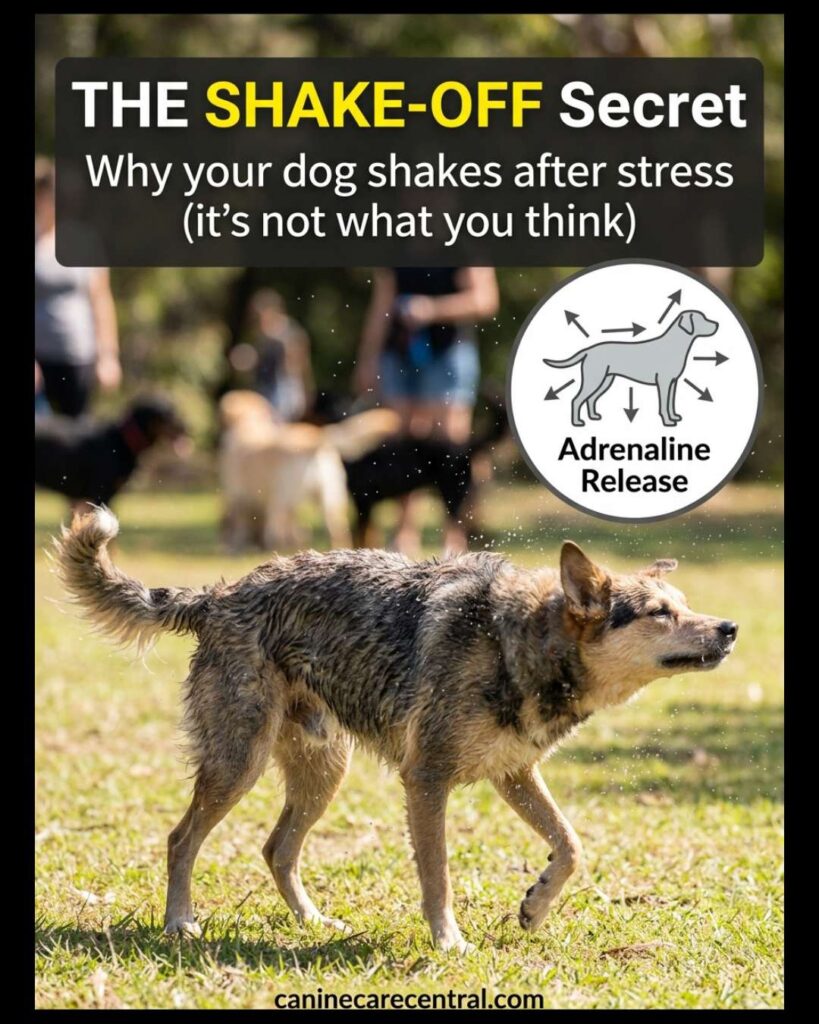
When your dog shakes their entire body after a stressful moment, they are not drying off. They are performing an “adrenaline dump” to reset their nervous system.
At Canine Care Central, we focus on helping owners recognize the subtle recovery signals dogs use after stress.
That full-body shake—starting at the head and rippling down to the tail—is one of the most important built-in reset mechanisms in canine biology.
You’ll often see it after a tense dog-to-dog interaction, a vet exam, or even after a brief scare on a walk. It’s your dog’s way of discharging built-up tension and returning to emotional baseline.
Medical Questions? Talk to a Veterinarian 24/7.
Connect one-on-one with a licensed vet who will answer your questions in minutes.
*Article may contain affiliate links to retailers like Amazon and Chewy. Learn more on our disclosure page.
The Science Behind the “Adrenaline Dump”
This shake is not random. It is a precise neurological response to stress.
1. The Stress Spike
During a tense encounter, your dog’s body floods with adrenaline and cortisol. Heart rate increases, muscles tighten, and the body prepares for action.
2. The Physical Release Mechanism
Once the situation ends and the threat is gone, the body needs to come back down. The shake acts like a neurological “reset button,” physically releasing that stored tension through rapid muscle contractions.
3. Returning to Baseline
After the shake, many dogs visibly relax. Their breathing slows, posture softens, and they are able to move on without carrying lingering stress forward.
Hey there, sorry to interrupt but I wanted to tell you about an online vet service I’ve been using for years.
An in-person visit with one is great, but it’s not always an option.
Now, thanks to technology, you can speak to one without leaving your home.
Got something to ask a vet?
Talk to one anytime, 24/7.
* Don’t use this service for emergencies.
Thank you. The rest of the article continues below.
When You’ll Commonly See the Shake-Off
This behavior shows up in everyday situations, not just extreme stress.
- After Meeting Another Dog: Even neutral or slightly awkward greetings can build tension.
- Post-Vet Handling: After being examined, restrained, or lifted onto a table.
- After Being Hugged or Restrained: Once released from something physically uncomfortable.
- Following a Startle: Loud noises, sudden movements, or unexpected events.
How to Tell a Stress Shake from Normal Shaking
Not all shaking is the same. Context and timing matter.
- Stress Shake: Happens immediately after a tense or stimulating event. It’s quick, full-body, and followed by visible relaxation.
- Wet Dog Shake: Occurs when actually wet and often repeats multiple times.
- Medical Shaking: Persistent trembling without a clear trigger can indicate pain, illness, or cold and should be evaluated.
Why You Should Not Interrupt This Behavior
This is one of the few times where doing nothing is exactly the right move.
- It’s Self-Regulation: Your dog is actively calming themselves down without your help.
- Interrupting Delays Recovery: Calling them mid-shake or grabbing them can prolong stress.
- It Prevents Escalation: Dogs that successfully “shake it off” are less likely to carry tension into the next interaction.
How to Support Your Dog After a Stressful Moment
Once your dog completes the shake, you can help reinforce calm behavior.
- Create Space: Move away from the trigger and allow decompression.
- Lower Stimulation: Avoid immediately reintroducing another stressful interaction.
- Encourage Sniffing: Let your dog explore calmly—sniffing helps regulate heart rate.
📖 Don’t Miss This…
Need more ideas on what to cook for your dog? Then you must check out my library of dog care articles today!
Frequently Asked Questions
Is shaking after stress a good sign?
Yes. It indicates your dog has the ability to self-regulate and release tension effectively, which is a sign of emotional resilience.
What if my dog doesn’t shake after stress?
Not all dogs use the shake-off visibly. Some may carry tension longer, which can show up as lingering stiffness, panting, or reactivity. These dogs may benefit from more structured decompression time.
Wrap Up
That dramatic full-body shake after a tense moment is not random behavior—it is a built-in biological reset. By releasing adrenaline and lowering internal stress, your dog is actively protecting their emotional balance. Recognizing and respecting this signal allows you to support healthier, calmer behavior in everyday life.


