Do you know what DOG ESSENTIALS you are missing out? Find out now!


Zack Keithy, our author, is a certified veterinarian technician (UC Blue Ash) for over 6 years (contact him here). The articles written here are based on his expertise and experience, combined with a review by our expert vet reviewers including Dr M. Tarantino. Learn more about us here.
It’s a phenomenon every dog owner knows: you barely touch the handle of the deli drawer, and suddenly, your dog is standing at your feet. Here is the neurological reality of “Selective Hearing” and why your dog’s brain is hardwired to detect the specific frequency of a plastic wrapper over almost any other sound…
At Canine Care Central, we find the “Cheese Tax” both hilarious and scientifically fascinating.
While we often joke about our dogs being “greedy,” their ability to detect a snack from the other side of the house is an incredible display of auditory specialization.
A dog’s hearing is four times more sensitive than a human’s, but it isn’t just about volume. It is about “Pattern Recognition.”
Your dog’s brain isn’t just listening to noise; it is scanning for specific high-frequency vibrations that signify a high-value protein reward.
By the time you’ve pulled the cheddar out, your dog’s brain has already triggered a “Dopamine Spike” that makes their appearance at your side nearly involuntary.
Medical Questions? Talk to a Veterinarian 24/7.
Connect one-on-one with a licensed vet who will answer your questions in minutes.
*Article may contain affiliate links to retailers like Amazon and Chewy. Learn more on our disclosure page.
The “Deli-Drawer” Radar: How Canopy Hearing Works
A dog’s ears are powered by 18 individual muscles that allow them to tilt, rotate, and “tunnel” sound in ways humans cannot imagine.
1. High-Frequency Tuning
The sound of a plastic cheese wrapper or the specific “click-slide” of a refrigerator drawer occupies a high-frequency range (around 3,000 to 12,000 Hz). In the wild, this range is where small prey—like mice or squirrels—scurrying through grass would be detected. Your kitchen noises accidentally mimic the frequencies of a successful hunt.
2. The Relationship Between Sound and Scent
By the time you hear the “crinkle” of the bag, microscopic “volatile organic compounds” (scent molecules) of the cheese have already begun to move through the house via air currents. Dogs use their ears to “alert” and then their nose to “confirm.” The reason they show up before you open the package is that their nose told them you were headed to the fridge, and their ears told them exactly when you arrived.
3. Associative Learning (The Pavlovian Loop)
Every time you pay the “Cheese Tax,” you are strengthening a neural pathway in your dog’s brain. The sound of the fridge drawer becomes a “Secondary Reinforcer.” For a dog, that drawer is no longer a piece of kitchen equipment; it is a musical instrument that signals an impending protein infusion.
Hey there, sorry to interrupt but I wanted to tell you about an online vet service I’ve been using for years.
An in-person visit with one is great, but it’s not always an option.
Now, thanks to technology, you can speak to one without leaving your home.
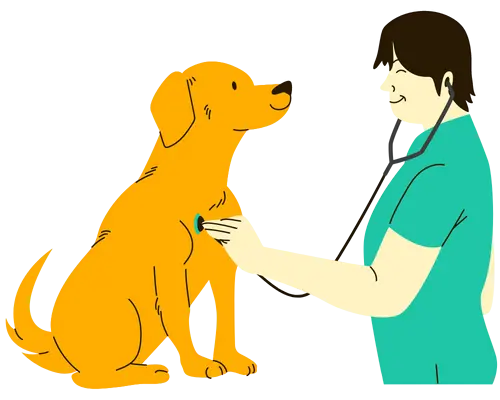
Got something to ask a vet?
Talk to one anytime, 24/7.
* Don’t use this service for emergencies.
Thank you. The rest of the article continues below.
Is the “Cheese Tax” Safe?
While a small bit of cheese is a great high-value training reward, not all dairy is created equal in the canine digestive tract.
- The Lactose Limit: Most adult dogs are lactose intolerant to some degree. While “hard” aged cheeses (like Cheddar or Parmesan) have very little lactose, soft cheeses or milk can cause significant GI upset.
- The Sodium Warning: Processed “American” cheese slices and deli meats are loaded with sodium and nitrates. Excessive salt can lead to dehydration and, in senior dogs, can put undue stress on the kidneys.
- The “Zero-Xylitol” Check: Always ensure any “spreadable” snacks (like flavored cream cheeses) do not contain Xylitol or onion/garlic powders, which are highly toxic to dogs.

Frequently Asked Questions
Why does my dog ignore me when I call them, but hears the cheese?
This is “Auditory Filtering.” A dog’s brain can prioritize “Biological Significance.” Your voice is a constant background sound, but the cheese drawer represents a high-priority survival resource. If you want a better recall, you have to make your voice as exciting as the “crinkle” of a wrapper!
Can dogs hear the “ultrasonic” sound of a fridge?
Modern refrigerators emit high-pitched hums that humans can’t hear. Dogs can detect these electronic frequencies. They may actually be able to hear the “compressor” shift when the door is opened, giving them a “pre-warning” before you even reach the handle.
📖 Don’t Miss This…
Need more ideas on what to cook for your dog? Then you must check out my library of dog care articles today!
Wrap Up
The next time your dog appears out of thin air to collect the “Cheese Tax,” remember that you are witnessing one of nature’s most advanced sensory systems in action. Their “Selective Hearing” isn’t defiance—it’s high-speed survival physics. Just make sure the “Tax” is healthy!


