Do you know what DOG ESSENTIALS you are missing out? Find out now!


Zack Keithy, our author, is a certified veterinarian technician (UC Blue Ash) for over 6 years (contact him here). The articles written here are based on his expertise and experience, combined with a review by our expert vet reviewers including Dr M. Tarantino. Learn more about us here.
As a dog parent, there is nothing worse than feeling helpless while watching your dog struggle with anxiety.
For dogs, anxiety is not just a case of having the jitters, but rather, it involves a complex and overwhelming physiological experience.
Anxiety in dogs requires vigilance and compassion from their guardians if they are to make sense of what is going on in their four-legged family member’s life.
Let’s learn more about this.
Medical Questions? Talk to a Veterinarian 24/7.
Connect one-on-one with a licensed vet who will answer your questions in minutes.
*Article may contain affiliate links to retailers like Amazon and Chewy. Learn more on our disclosure page.
The Hidden Language of Dog’s Anxiety and Distress
Imagine how you feel just before a big presentation. (The dreaded sensation of your stomach dropping.)
That is the same feeling dogs experience when they hear a distant rumble of thunder or see a person reaching for their car keys.
The problem is that dogs cannot tell you how they feel.
Rather, they communicate their feelings through a Morse Code-like series of flicks of their tongue or burrito-like tail tuck.
It’s frustrating for you as guardian and caregiver to try and help your dog through this kind of anxiety, and yet they are exhibiting such an exaggerated level of physical energy that it feels as though they are vibrating like a smartphone sitting on a marble counter.

Physical Red Flags You Might Miss
Most folks look for the obvious stuff—the cowering, the whimpering—but anxiety is often a master of disguise. It shows up in the “boring” behaviors we dismiss as quirks.
If your dog is suddenly shedding enough fur to knit a second dog, or if their breath smells like a swamp despite a clean bill of dental health, pay attention. These aren’t just grooming issues; they’re stress signals.
- Lip Licking and Yawning: No, they aren’t tired or hungry. If there’s no food in sight, a “flick” of the tongue is a classic self-soothing mechanism.
- The “Whites of the Eyes”: Known as Whale Eye, this is when your dog keeps their head still but follows a “threat” with their eyes, revealing the sclera. It’s a sign they’re on the edge of a localized meltdown.
- Panting without Heat: If it’s 65 degrees in the living room and your Lab is huffing like he just ran a marathon, his cortisol levels are likely spiking.
- Displacement Grooming: Sudden, intense licking of a paw or the flank. It’s the canine version of biting your fingernails until they bleed.
Hey there, sorry to interrupt but I wanted to tell you about an online vet service I’ve been using for years.
An in-person visit with one is great, but it’s not always an option.
Now, thanks to technology, you can speak to one without leaving your home.
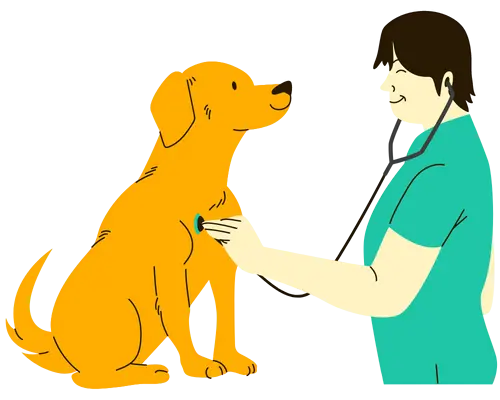
Got something to ask a vet?
Talk to one anytime, 24/7.
* Don’t use this service for emergencies.
Thank you. The rest of the article continues below.
Why Is This Happening? The “Root” of the Restlessness
Anxiety doesn’t just fall out of the sky, though sometimes it feels that way. It’s usually a cocktail of genetics, early-life “spook” moments, and environmental triggers. Maybe they were the runt who got shoved aside at the milk bar, or perhaps they’ve just got a sensitive nervous system. Some dogs are just born “soft,” as we say in the industry. It’s nobody’s fault, really, so let’s get that guilt off your shoulders right now.
Common Triggers in a Modern World
Our world is loud. It’s chaotic. We have Amazon vans beeping, Alexas talking, and neighbors launching fireworks for no discernible reason on a Tuesday. To a dog, this isn’t just noise; it’s a potential breach of their “safe zone.” Separation anxiety is the big one, of course—the heartbreaking realization that for some dogs, your departure feels like a permanent abandonment. It’s heavy stuff.
Expert Corner: The “Trigger Stacking” Phenomenon
Think of your dog’s tolerance as a literal bucket. A loud truck adds a cup of water. A guest entering the house adds another. By the time the mail carrier arrives, the bucket overflows, and you get an “unprovoked” explosion. The secret isn’t just fixing the explosion; it’s emptying the bucket throughout the day with scent games and decompression walks (long leashes, low pressure).
How to Step in Without Making it Worse
We humans have a terrible habit of “shushing” and hovering. When we coo “It’s okay, it’s okay” in a high-pitched, nervous warble, we’re actually validating the dog’s fear.
We’re saying, “You’re right to be scared, because I’m sounding pretty freaked out too!” It’s a hard habit to break. I still do it sometimes, and I’ve been doing this for decades. We’re only human, after all.
A Step-by-Step Response Plan
- Check Your Own Energy: Take a breath. If you’re tense, your dog will mirror it. Be the “boring” anchor they need.
- Create a “Safe Haven”: This isn’t just a crate; it’s a sanctuary. Think dim lights, white noise (a box fan works wonders), and an old t-shirt that smells like you.
- The “Touch” Test: If your dog moves away when you try to comfort them, let them. Some dogs find touch overstimulating when they’re in a “fight or flight” loop.
- Consult the Pros: If your dog is self-harming or unable to eat/sleep due to fear, it’s time for a vet visit. This isn’t a failure on your part. Sometimes, the brain’s wiring needs a little chemical help to find its baseline again.
When to See a DVM
I cannot stress this enough: Please consult your local veterinarian before trying any supplements or over-the-counter “calming” chews.
What looks like anxiety could occasionally be a hidden pain response, like a brewing ear infection or a funky tooth.
You don’t want to treat a “fear” problem when it’s actually a “my hip hurts” problem. Always rule out the physical first. It’s just good parenting.
📖 Don’t Miss This…
Need more ideas on what to cook for your dog? Then you must check out my library of dog care articles today!
Conclusion: The Path Forward
Understanding dog anxiety isn’t about finding a “magic button” that turns it off. It’s about learning to read the subtle shifts in your dog’s posture and becoming the advocate they can’t be for themselves. It takes patience—a lot of it—and a willingness to celebrate the tiny victories, like a relaxed sigh during a thunderstorm.
Your next step? Start a “Stress Journal” for three days. Note down exactly what happened right before your dog showed a symptom; you might find a pattern that changes everything.


