Do you know what DOG ESSENTIALS you are missing out? Find out now!


Zack Keithy, our author, is a certified veterinarian technician (UC Blue Ash) for over 6 years (contact him here). The articles written here are based on his expertise and experience, combined with a review by our expert vet reviewers including Dr M. Tarantino. Learn more about us here.
A South Charlotte pet owner is warning neighbors to stay vigilant after his dog disappeared from their backyard in a matter of seconds during a suspected coyote encounter.
The incident took place in the Huntingtowne Farms neighborhood near Park Road in Charlotte, North Carolina 28210, United States. WBTV and The Cool Down reported on the incident and local safety concerns on October 17, 2026.
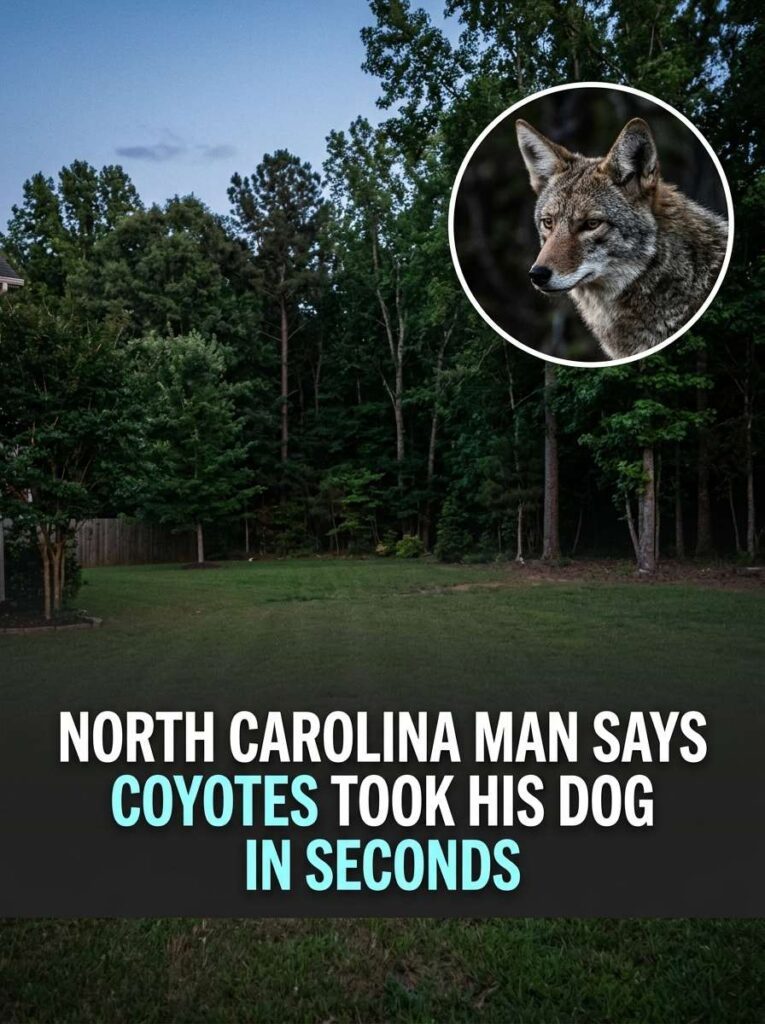
Resident Dan Millea let his dog Luna outside shortly after 8 p.m. on October 1 alongside another family dog while he prepared to join them outdoors. Within moments, the second dog retreated to the porch, but Luna was nowhere to be found. Millea spent three hours searching the immediate area without finding any blood or fur, noting that the disappearance occurred so rapidly he heard no sound of a struggle or yelping.
Neighbors and family members have reported multiple coyote sightings in the area, including an encounter on the night Luna vanished and a prior sighting of a large coyote in the family’s backyard. Because coyotes are native to North Carolina, state wildlife officials do not respond solely to sightings, leaving animal control agencies to intervene only when direct physical contact or injuries occur.
Local wildlife authorities advise pet owners in suburban neighborhoods to maintain close supervision of domestic animals, especially after dark. Residents dealing with persistent wildlife concerns must hire licensed private trappers, though experts note that removing individual animals rarely eliminates neighborhood coyote populations entirely.
My thoughts:
- Suburban development overlapping with natural habitats increases direct interactions between pet owners and native predator populations.
- Supervision and keeping pets on short leashes during evening hours are essential preventive measures in areas with known coyote activity.
- State wildlife agencies typically limit active intervention to physical attack cases rather than general sightings, putting the onus of preventive care on pet owners.
- Relocating individual urban coyotes often fails to solve neighborhood safety issues because territorial pack dynamics attract new animals.
- Installing secure motion-activated lighting and physical fencing can help deter wild predators from entering residential yards.
- Community communication and timely neighbor alerts play a key role in protecting small domestic animals across suburban developments.
Source: WBTV (Shannon Germaine) and North Carolina Wildlife Resources Commission