Do you know what DOG ESSENTIALS you are missing out? Find out now!



Zack Keithy, our author, is a certified veterinarian technician (UC Blue Ash) for over 6 years (contact him here). The articles written here are based on his expertise and experience, combined with a review by our expert vet reviewers including Dr M. Tarantino. Learn more about us here.
Do you want to prepare nutritious homemade food for your dog that doesn’t costs you too much?
Many dog owners face the prices of high-quality commercial dog foods and at the same time are concerned about the ingredients that they do not know in their pet’s food.
You find it hard to balance your budget while still giving your furry friend the best of nutrition.
This recipe is a great way to make your dog a healthy, home-cooked meal that he will like without spending a lot and using materials that are at hand.
Medical Questions? Talk to a Veterinarian 24/7.
Connect one-on-one with a licensed vet who will answer your questions in minutes.
*Article may contain affiliate links to retailers like Amazon and Chewy. Learn more on our disclosure page.
Recipe Overview
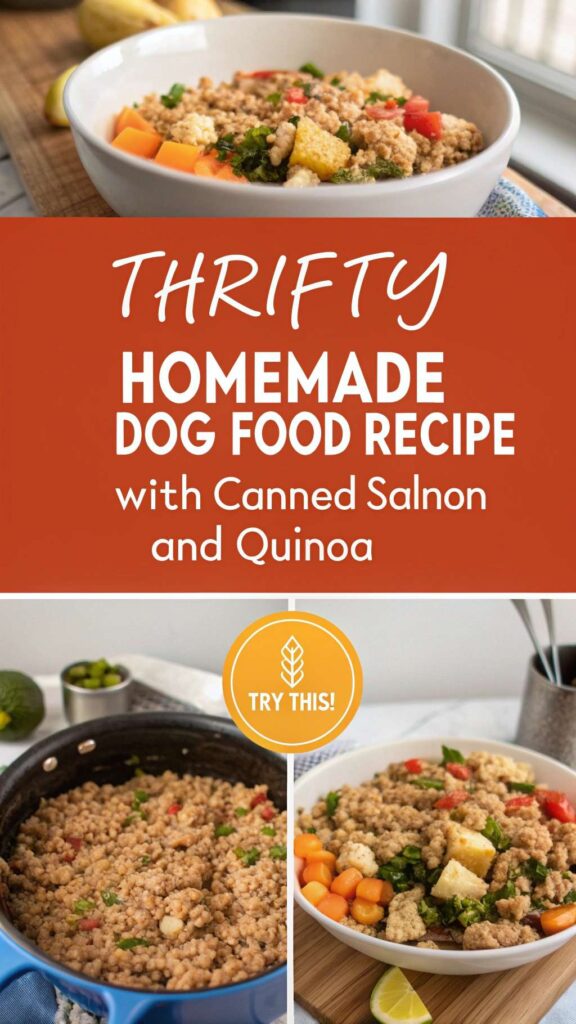
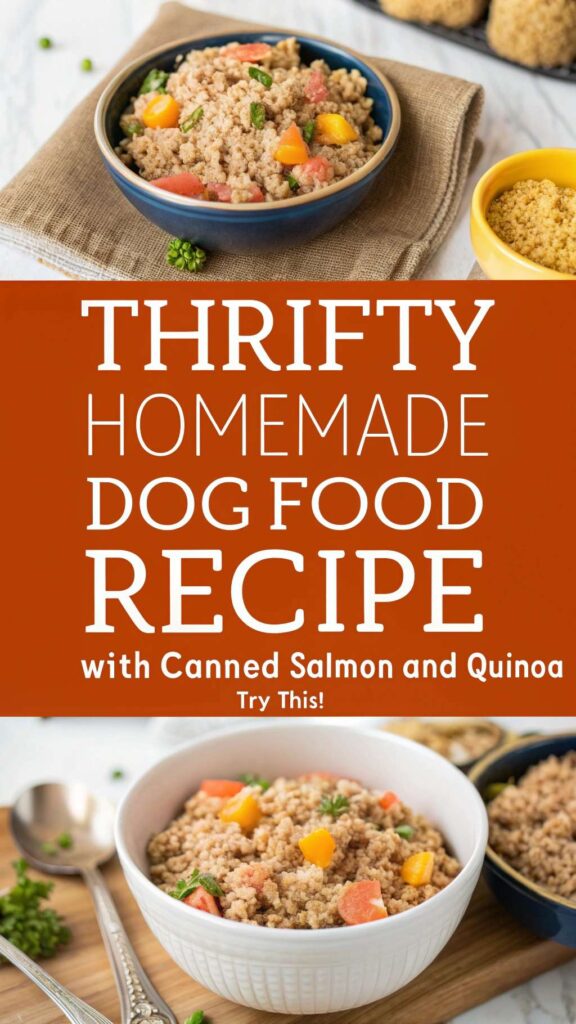
- This thrifty homemade dog food recipe uses canned salmon and quinoa to create a balanced, cost-effective meal.
- It’s packed with Omega-3s, lean protein, and complex carbohydrates for sustained energy.
- Ideal for active dogs or those needing a boost in coat health.
- Prep time: 15 minutes
- Cook time: 25 minutes
- Serving size: Approximately 8-10 servings (for a medium-sized dog)
[lasso ref=”fave” id=”19043″]
Ingredients List
- 1 can (14.75 oz) boneless, skinless salmon, packed in water: $3.50 (provides essential Omega-3 fatty acids and protein)
- 1 cup uncooked quinoa: $2.00 (a complete protein and gluten-free grain, rich in fiber)
- 2 cups low-sodium chicken or vegetable broth: $1.00 (adds flavor and moisture, ensure no onion or garlic)
- 1 cup chopped carrots: $0.50 (packed with Vitamin A for vision)
- 1 cup chopped green beans: $0.50 (good source of vitamins K, C, and manganese)
- 1 tablespoon olive oil: $0.20 (healthy fats for skin and coat)
- 1/2 cup fresh spinach, finely chopped: $0.75 (rich in iron and antioxidants)
- 2 hard-boiled eggs, chopped: $0.50 (extra protein boost)
Suitable Substitutions:
- Salmon: Canned sardines (in water, no salt added) or cooked, flaked cod.
- Quinoa: Brown rice or rolled oats (ensure they are cooked thoroughly).
- Carrots/Green Beans: Cooked sweet potato, peas, or pumpkin puree.
- Chicken Broth: Water with a pinch of dog-safe herbs like parsley.
Total Estimated Cost: $8.95
Step-by-Step Instructions
- First, rinse the quinoa thoroughly under cold water.
- This helps remove bitterness and improves its texture.
- Then, combine the rinsed quinoa and low-sodium broth in a medium saucepan.
- Bring it to a boil, then reduce heat to low, cover, and simmer for 15 minutes, or until all the liquid is absorbed and the quinoa is fluffy.
- While the quinoa cooks, drain the canned salmon well.
- Mash it lightly with a fork in a separate bowl.
- In a large skillet, heat the olive oil over medium heat.
- Add the chopped carrots and green beans, and sauté for 5-7 minutes until tender-crisp.
- Stir occasionally to prevent sticking.
- Once the quinoa is cooked, fluff it with a fork and add it to the skillet with the vegetables.
- Stir in the mashed salmon, finely chopped spinach, and chopped hard-boiled eggs.
- Mix everything well until heated through and combined.
- Remove from heat and let it cool completely before serving to your dog.
[lasso ref=”the-forever-dog-life-120-recipes-longevity-tips-and-new-science-for-better-bowls-and-healthier-homes” id=”18607″]
Feeding Guidelines
- The amount you feed depends on your dog’s size, age, activity level, and metabolism.
- As a general guide, small dogs (under 20 lbs) might eat 1/2 to 1 cup per day.
- Medium dogs (20-50 lbs) typically need 1.5 to 2.5 cups daily.
- Large dogs (over 50 lbs) could need 3 to 4.5 cups or more.
- For example, a high-energy Border Collie will need more than a less active Bulldog.
- Puppies and senior dogs may have different nutritional needs.
- Puppies need more frequent, smaller meals, while seniors might need fewer calories.
- Always consult your veterinarian for personalized feeding recommendations, especially when transitioning to new food.
Look, prepping and cooking for your dog is great, but sometimes you might be too tired or maybe a tad lazy, or maybe you just want to give yourself a well deserved break.

In such times, you want something reliable and nutritious for your dog, and that’s where Ollie comes in. It’s my favorite dog food subscription ever.
Fresh human grade dog food sent to your doorstep, and there’s no lock in.
Give it a shot, will ya?
Nutritional Benefits of the Recipe
- Canned Salmon: A fantastic source of Omega-3 fatty acids (EPA and DHA).
- These fats support brain health, reduce inflammation, and promote a shiny coat and healthy skin.
- Quinoa: It’s a complete protein, meaning it contains all nine essential amino acids.
- It’s also high in fiber, aiding digestion, and provides sustained energy without spiking blood sugar.
- Carrots: Loaded with beta-carotene, which converts to Vitamin A, crucial for good vision and immune function.
- They also offer dietary fiber for gut health.
- Green Beans: Low in calories but high in essential vitamins like K and C, as well as manganese.
- They add a healthy crunch and extra fiber.
- Spinach: Rich in iron, Vitamin K, and antioxidants.
- It supports bone health and boosts the immune system.
- Eggs: Provide high-quality protein and essential amino acids.
- They are also a good source of vitamins D and B, important for overall health.

Storage and Serving Tips
- Let the food cool completely before storing.
- Store any leftovers in an airtight container in the refrigerator for up to 3-4 days.
- For longer storage, divide the cooled food into individual serving portions and freeze.
- It can be frozen for up to 2-3 months.
- To reheat from frozen, thaw in the refrigerator overnight or gently warm in the microwave.
- Always ensure the food is at a safe, lukewarm temperature before serving.
- You can serve this meal warm, at room temperature, or mixed with your dog’s regular kibble for a nutritional boost.
Common Questions & Troubleshooting
How can I make sure this recipe is balanced for my dog?
While this recipe is nutritionally dense, it’s best for occasional feeding or as a supplement.
For long-term feeding, talk to your vet or a canine nutritionist to ensure it meets all your dog’s specific dietary needs.
Can I add other vegetables?
Absolutely! Most dog-safe vegetables work well.
Try adding peas, pumpkin puree, or cooked sweet potato.
Just be sure to avoid onions, garlic, grapes, and xylitol, which are toxic to dogs.
My dog has a sensitive stomach. Is this recipe suitable?
This recipe uses easily digestible ingredients like quinoa and salmon.
But, introduce any new food slowly over several days to watch for any adverse reactions.
Start with a small amount mixed with their current food.
What if my dog doesn’t like fish?
You can substitute the canned salmon with cooked, shredded chicken or turkey.
Make sure it’s plain, unseasoned meat.
The nutritional profile will shift slightly, but it will still be a wholesome meal.
Is canned salmon safe for dogs?
Yes, boneless, skinless canned salmon packed in water (not oil) and low in sodium is generally safe for dogs.
It’s a great way to provide Omega-3s.
Always check the label for added salt or harmful ingredients.
📖 Don’t Miss This…
Need more ideas on what to cook for your dog? Then you must check out my library of homemade dog food recipes today!
Wrapping Up
Making healthy, homemade food for your dog doesn’t have to be hard or expensive.
This recipe offers a simple, budget-friendly way to boost your dog’s nutrition and add variety to their diet.
Feeling inspired? Pin this recipe to your Homemade Dog Food board for easy access and follow us for more pet-friendly tips!