Do you know what DOG ESSENTIALS you are missing out? Find out now!



Zack Keithy, our author, is a certified veterinarian technician (UC Blue Ash) for over 6 years (contact him here). The articles written here are based on his expertise and experience, combined with a review by our expert vet reviewers including Dr M. Tarantino. Learn more about us here.
Have you ever thought about what’s really going into your dog’s bowl?
There are a lot of foods that you buy from the store that are full of strange fillers and things that you can’t even pronounce.
And occasionally, those ingredients may cause your dog to have an upset stomach or skin problems.
But suppose you could very simply make something that is both healthy and tasty in your own kitchen? Would you do it today?
Medical Questions? Talk to a Veterinarian 24/7.
Connect one-on-one with a licensed vet who will answer your questions in minutes.
*Article may contain affiliate links to retailers like Amazon and Chewy. Learn more on our disclosure page.
Recipe Overview
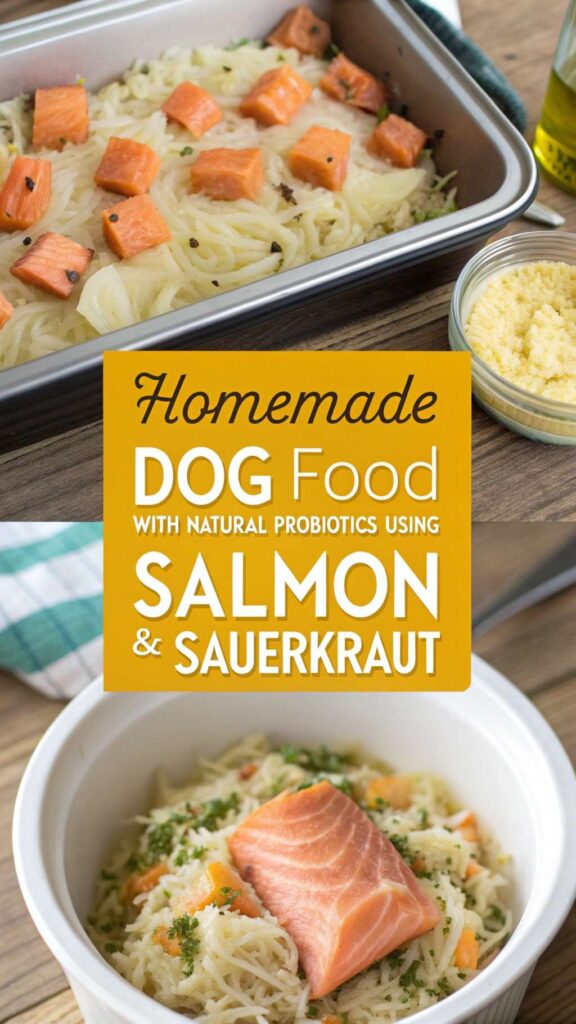
- This homemade dog food recipe combines the power of salmon and natural probiotics from sauerkraut.
- It supports healthy digestion and boosts immunity.
- Prep time: 15 minutes
- Cook time: 25 minutes
- Serving size: Makes about 6-8 cups, suitable for a medium-sized dog for 3-4 days.
[lasso ref=”fave” id=”19043″]
Ingredients List
- Wild-Caught Salmon Fillets (boneless, skinless): 1.5 lbs (approx. $18-24). Packed with Omega-3s.
- Brown Rice (uncooked): 1 cup (approx. $0.50). Provides complex carbohydrates.
- Carrots: 2 large (approx. $0.75). Good source of Vitamin A.
- Green Beans (fresh or frozen): 1 cup (approx. $1.00). Fiber and vitamins.
- Plain, Unpasteurized Sauerkraut: 1/2 cup (approx. $3.00-5.00). Natural probiotics for gut health. Make sure it’s plain, no added spices.
- Extra Virgin Olive Oil: 1 tablespoon (approx. $0.20). Healthy fats. Canine Multivitamin/Mineral Supplement: As directed by product label (approx. $0.50 per serving). Ensures complete nutrition.
Total Estimated Cost: $23.95 – $32.45
Substitutions:
- Salmon → Cod or Sardines for similar benefits, or lean ground turkey/chicken for a different protein source.
- Brown Rice → Quinoa or cooked sweet potato.
- Green Beans → Spinach or peas.
Step-by-Step Instructions
- First, cook the brown rice. Rinse 1 cup of brown rice thoroughly. Add it to a pot with 2 cups of water. Bring it to a boil, then reduce heat, cover, and simmer for about 20-25 minutes, or until the water is absorbed and the rice is tender.
- While the rice cooks, prepare the vegetables. Wash the carrots and green beans. Chop the carrots into small, dog-bite-sized pieces. If using fresh green beans, chop them too.
- Next, steam or boil the vegetables until they are tender-crisp. You want them soft enough for your dog to digest easily, but not mushy. This usually takes about 5-7 minutes for carrots and 3-5 minutes for green beans.
- Now, cook the salmon. You can bake it, steam it, or poach it. For baking, preheat your oven to 375°F (190°C), place salmon on a baking sheet, and bake for 12-15 minutes, or until cooked through and flakes easily. For steaming, place it in a steamer basket over boiling water for 8-10 minutes.
- Once the salmon is cooked, let it cool slightly. Then, flake it into small pieces, making sure there are no bones.
- In a large bowl, combine the cooked brown rice, cooked carrots, and cooked green beans.
- Add the flaked salmon to the bowl.
- Stir in the unpasteurized sauerkraut and the extra virgin olive oil. Mix everything together really well.
- Finally, add the recommended amount of canine multivitamin/mineral supplement according to its package instructions. This is super important to make sure your dog gets all their necessary nutrients.
Look, prepping and cooking for your dog is great, but sometimes you might be too tired or maybe a tad lazy, or maybe you just want to give yourself a well deserved break.

In such times, you want something reliable and nutritious for your dog, and that’s where Ollie comes in. It’s my favorite dog food subscription ever.
Fresh human grade dog food sent to your doorstep, and there’s no lock in.
Give it a shot, will ya?
Feeding Guidelines
- Small Dogs (up to 20 lbs): Feed 1/2 to 1 cup per day, split into two meals. For example, a Chihuahua might need 1/2 cup, while a Jack Russell Terrier might need closer to 1 cup.
- Medium Dogs (20-50 lbs): Offer 1.5 to 2.5 cups per day, divided into two meals. A Beagle might do well with 1.5 cups, a Border Collie might need 2.5 cups.
- Large Dogs (50+ lbs): Provide 3 to 4+ cups per day, split into two or three meals. A Labrador Retriever might need 3 cups, a Great Dane could need 4 or more.
- These are general guidelines. Puppies, pregnant/nursing dogs, or very active dogs will need more calories. Less active or overweight dogs will need less.
- Always talk to your vet to get personalized feeding advice for your dog’s specific needs, breed, activity level, and health conditions. They can help you figure out the exact right amount.
[lasso ref=”the-forever-dog-life-120-recipes-longevity-tips-and-new-science-for-better-bowls-and-healthier-homes” id=”18607″]
Nutritional Benefits of the Recipe
- Salmon: This is a powerhouse of high-quality protein and Omega-3 fatty acids. These fats are amazing for a shiny coat, healthy skin, and reducing inflammation. They also support brain and heart health.
- Brown Rice: Offers complex carbohydrates, which are a steady energy source. It also provides dietary fiber for healthy digestion and B vitamins for energy metabolism.
- Carrots: Loaded with beta-carotene, which converts to Vitamin A. This is crucial for good vision and immune function. They also add fiber.
- Green Beans: Low in calories but high in fiber, Vitamin C, Vitamin K, and manganese. They support bone health and provide antioxidants.
- Plain Unpasteurized Sauerkraut: This is where the natural probiotics come in. These beneficial bacteria promote a healthy gut microbiome, aid digestion, and boost the immune system. A healthy gut means better nutrient absorption and overall wellness.
- Extra Virgin Olive Oil: A source of monounsaturated fats and antioxidants like Vitamin E. It helps with nutrient absorption and supports skin and coat health.
- Canine Multivitamin/Mineral Supplement: Crucial for filling any nutritional gaps. It ensures your dog gets all essential vitamins (A, D, E, K, B-complex) and minerals (Calcium, Phosphorus, Magnesium, Iron, Zinc, etc.) needed for a balanced diet.

Storage and Serving Tips
- Refrigerate: Store leftovers in an airtight container in the refrigerator for up to 3-4 days.
- Freeze: For longer storage, divide the food into daily portions and freeze in freezer-safe containers or bags. It can last for up to 2-3 months in the freezer.
- Reheating: Thaw frozen portions in the refrigerator overnight. You can serve it cold, at room temperature, or gently warm it slightly in the microwave or on the stovetop. Make sure it’s not too hot before serving.
- Serving Ideas: You can serve this as a complete meal. Or, if your dog is transitioning or picky, mix it in with their regular kibble. This can make their usual food more appealing and add a nutrient boost.
Common Questions & Troubleshooting
Can I use canned salmon?
Yes, but make sure it’s packed in water and has no added salt or spices. Drain it well before using.
My dog has a sensitive stomach, is sauerkraut okay?
For sensitive dogs, introduce sauerkraut very slowly in tiny amounts. Start with a quarter teaspoon and gradually increase it. Watch for any signs of upset stomach.
How do I know if the multivitamin supplement is necessary?
Homemade diets often lack some essential vitamins and minerals if not formulated by a vet nutritionist. A quality canine multivitamin ensures your dog gets a complete and balanced diet. Always consult your vet about specific supplements for your dog.
Can I add other vegetables?
Absolutely! Dog-safe vegetables like spinach, peas, broccoli, or sweet potato are great additions. Always cook them thoroughly and chop them into small pieces. Avoid onions, garlic, grapes, and avocado.
📖 Don’t Miss This…
Need more ideas on what to cook for your dog? Then you must check out my library of homemade dog food recipes today!
Wrapping Up
Making your dog’s food at home can feel like a big step, but this salmon and sauerkraut recipe makes it simple and rewarding. You’re giving your furry friend a meal packed with fresh, healthy ingredients that support their gut and overall well-being.
Feeling inspired? Pin this recipe to your Homemade Dog Food board for easy access and follow us for more pet-friendly tips!