Do you know what DOG ESSENTIALS you are missing out? Find out now!


Zack Keithy, our author, is a certified veterinarian technician (UC Blue Ash) for over 6 years (contact him here). The articles written here are based on his expertise and experience, combined with a review by our expert vet reviewers including Dr M. Tarantino. Learn more about us here.
You catch your Golden mid-scratch, coat losing its golden glow, and that pang hits: store-bought kibble’s mystery ingredients aren’t delivering.
I’ve been there, decoding endless labels, knowing Goldens often need targeted nutrients for skin and shine.
Homemade changes everything, using simple, fresh food you control, so let’s go ahead and learn how to make this dog food recipe for Golden Retrievers right in your own kitchen.
Medical Questions? Talk to a Veterinarian 24/7.
Connect one-on-one with a licensed vet who will answer your questions in minutes.
*Article may contain affiliate links to retailers like Amazon and Chewy. Learn more on our disclosure page.
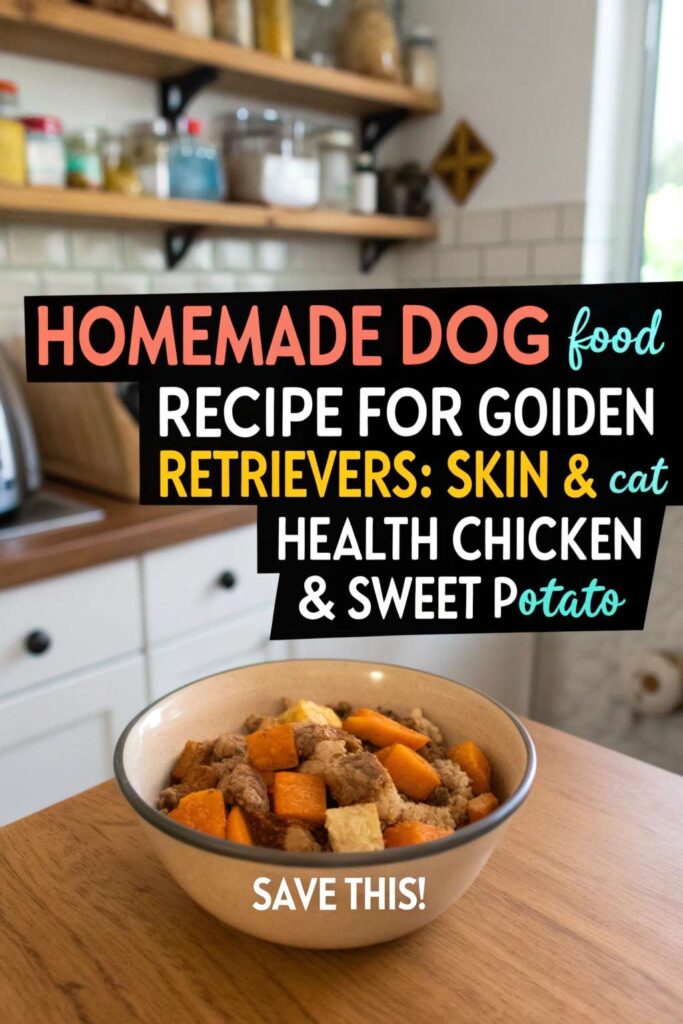
Our Go-To Recipe: Skin & Coat Health Chicken & Sweet Potato
This recipe is a favorite for a reason. It’s packed with ingredients known to support skin health and promote a shiny coat. Chicken provides lean protein, sweet potatoes are great for digestion and vitamins, and a few other key additions really make it sing.
This isn’t some fancy chef stuff. It’s simple, honest cooking for your best friend.
Ingredients You’ll Need
- 3 lbs boneless, skinless chicken thighs or breasts (thighs have more fat, which is good for skin/coat)
- 3 medium sweet potatoes, peeled and cubed
- 1 cup green beans, trimmed and chopped
- 1 cup carrots, peeled and chopped
- 1/2 cup cooked quinoa or brown rice (optional, for extra fiber and carbs)
- 2 tablespoons olive oil or flaxseed oil (for Omega-3s)
- 1/4 cup fresh parsley, chopped (natural breath freshener and antioxidants)
- 1/2 teaspoon turmeric powder (anti-inflammatory)
- A good quality canine vitamin and mineral supplement (Crucial for balance! Talk to your vet for recommendations.)
- Water or low-sodium chicken broth (no onion or garlic!)
[lasso ref=”fave” id=”19043″]
Cooking Instructions (Super Easy, Promise!)
- Cook the chicken: Put the chicken in a large pot. Cover it with water or low-sodium chicken broth. Bring it to a boil, then reduce heat and simmer until the chicken is fully cooked through (about 15-20 minutes). Take the chicken out, let it cool a bit, then shred or chop it into bite-sized pieces. Save about 1-2 cups of the cooking liquid.
- Cook the veggies: In the same pot with the saved cooking liquid (or fresh water/broth), add the cubed sweet potatoes, green beans, and carrots. Bring to a boil, then reduce heat and simmer until the vegetables are tender. This usually takes about 10-15 minutes.
- Combine everything: Drain any excess liquid from the vegetables (you want them moist, not watery). In a large bowl, combine the shredded chicken, cooked vegetables, and the optional quinoa/brown rice.
- Add the good stuff: Stir in the olive oil (or flaxseed oil), chopped parsley, and turmeric powder.
- The MOST important step: Once everything has cooled down completely, add the recommended amount of your chosen canine vitamin and mineral supplement. This is essential for a complete and balanced meal. DO NOT add it when the food is hot, as heat can degrade some nutrients.
- Mix it all up really well. You want the supplements evenly distributed.
Look, prepping and cooking for your dog is great, but sometimes you might be too tired or maybe a tad lazy, or maybe you just want to give yourself a well deserved break.

In such times, you want something reliable and nutritious for your dog, and that’s where Ollie comes in. It’s my favorite dog food subscription ever.
Fresh human grade dog food sent to your doorstep, and there’s no lock in.
Give it a shot, will ya?
Feeding and Storing
How much to feed? This varies wildly based on your dog’s age, activity level, and metabolism. A good starting point is usually 2-3% of their ideal body weight per day, divided into two meals. So, if your Golden is 60 lbs, that’s roughly 1.2 to 1.8 lbs of food per day. But seriously, chat with your vet about specific portion sizes for your dog. They know best.
Store leftovers in airtight containers in the fridge for up to 3-4 days. You can also freeze individual portions for up to a month. This makes meal prep super easy!

Why These Ingredients?
Every ingredient in this recipe plays a role in boosting your Golden’s skin and coat health.
- Chicken: Excellent source of lean protein for strong muscles and healthy hair growth.
- Sweet Potatoes: Packed with beta-carotene (converts to Vitamin A), Vitamin C, and fiber. All great for skin health and a healthy immune system.
- Green Beans & Carrots: Provide essential vitamins, minerals, and fiber without adding too many calories. Antioxidants help protect skin cells.
- Olive/Flaxseed Oil: These are your Omega-3 and Omega-6 powerhouses. They’re critical for reducing inflammation, promoting a shiny coat, and keeping skin supple. Flaxseed oil is especially high in ALA, an Omega-3 fatty acid.
- Parsley: Not just for fresh breath! It’s rich in antioxidants and vitamins K and C.
- Turmeric: A natural anti-inflammatory. Great for dogs with sensitive skin or allergies.
- Vitamin & Mineral Supplement: This is non-negotiable. Homemade food, without proper supplementation, can lead to nutrient deficiencies. It ensures your dog gets everything they need.
[lasso ref=”the-forever-dog-life-120-recipes-longevity-tips-and-new-science-for-better-bowls-and-healthier-homes” id=”18607″]
Common Mistakes to Avoid
It’s easy to make a few slip-ups when you’re new to homemade dog food. Here are the big ones to watch out for:
- Not supplementing: I can’t stress this enough. Human food isn’t nutritionally complete for dogs. You absolutely need a vet-approved supplement.
- Too much fat or too little: Goldens need a good balance. Too much can cause pancreatitis; too little can leave their coat dull.
- Ignoring portion control: It’s easy to overfeed when you’re making yummy food. Stick to your vet’s guidance to avoid weight gain.
- Sudden changes: Like I said, introduce new foods slowly. A quick switch can cause stomach upset.
- Feeding toxic ingredients: NO onions, garlic, grapes, raisins, chocolate, avocado, xylitol, or cooked bones. Ever.
FAQ
Is homemade dog food really better than kibble?
It can be, but not always. A well-balanced homemade diet, prepared with high-quality ingredients and proper supplementation, can offer benefits like better digestion, improved coat health, and fewer allergies for some dogs. However, a poorly balanced homemade diet can be harmful. High-quality commercial kibble can also be excellent. It really comes down to the individual dog and how carefully the homemade food is prepared.
How do I know if this recipe is balanced for my dog?
This recipe is designed with common nutritional needs in mind, especially for skin and coat health, and it includes the critical step of adding a canine vitamin/mineral supplement. However, every dog is unique. The best way to be sure it’s perfectly balanced for YOUR dog is to consult with your veterinarian or a veterinary nutritionist. They can consider your dog’s specific age, activity level, and any health conditions.
Can I substitute ingredients in this recipe?
Some substitutions are okay, but be careful. For protein, you could use turkey instead of chicken. For vegetables, most dog-safe veggies like peas or spinach are fine, but keep the overall proportions similar. However, always ensure any new ingredients are safe for dogs (no onions, garlic, etc.) and introduce them slowly. If you’re changing a major component, like the primary carbohydrate source, it’s best to check with your vet to maintain nutritional balance.
My dog has a sensitive stomach. How do I introduce new food?
Always introduce new food gradually. Start by mixing a very small amount of the homemade food with their current food, say 10% new and 90% old. Over the course of 7-10 days, slowly increase the proportion of homemade food while decreasing the old food. Watch for any signs of digestive upset like diarrhea or vomiting. If you notice issues, slow down the transition or consult your vet.
What if my dog doesn’t like it?
Dogs can be picky, just like us! If they turn their nose up, don’t immediately give up. Sometimes warming the food slightly can make it more appealing. You can also try mixing a smaller amount into their regular food. If they still refuse, it might just not be to their taste, or they might prefer a different protein or vegetable combination. Don’t force it; try another balanced recipe or stick with what they do eat.