Do you know what DOG ESSENTIALS you are missing out? Find out now!

Zack Keithy, our author, is a certified veterinarian technician (UC Blue Ash) for over 6 years (contact him here). The articles written here are based on his expertise and experience, combined with a review by our expert vet reviewers including Dr M. Tarantino. Learn more about us here.
Is your dog on the naughty or nice list this year? The majority of us wish to spread the holiday cheer to our pets, but, typical Christmas treats may be harmful to dogs.
Besides, buying them in stores usually implies that the products contain dubious ingredients and that the dog’s stomach will be upset.
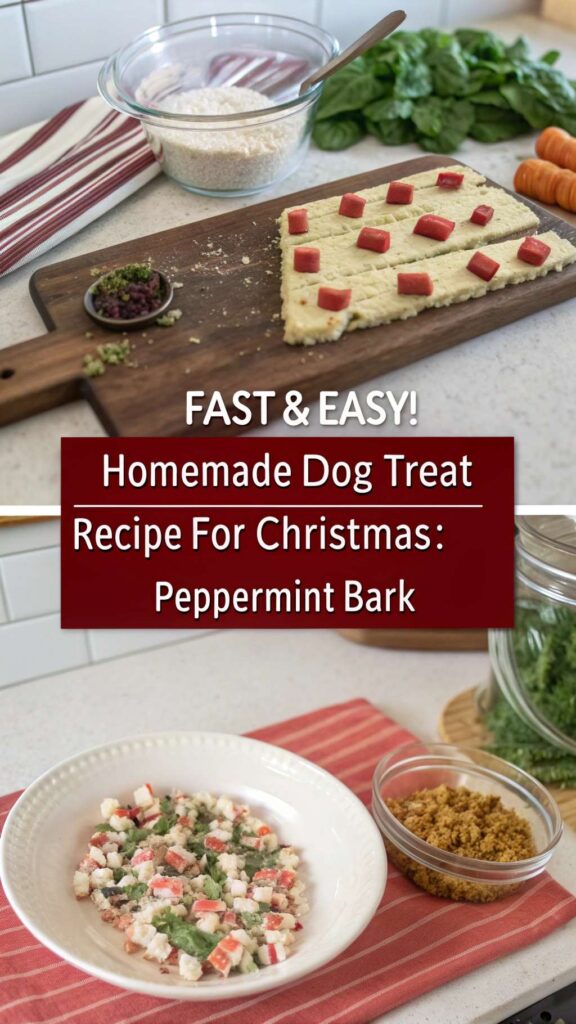
Good news though! I have the perfect homemade dog treat recipe you can use this festive season!
Medical Questions? Talk to a Veterinarian 24/7.
Connect one-on-one with a licensed vet who will answer your questions in minutes.
*Article may contain affiliate links to retailers like Amazon and Chewy. Learn more on our disclosure page.
Recipe Overview
- Purpose: This homemade peppermint bark is a safe, festive treat for your dog to enjoy during the holidays. It’s a fun way to include them in Christmas celebrations.
- Benefits: Made with simple, natural ingredients, these treats are free from harmful sugars, chocolate, and artificial flavors.
- Prep Time: 15 minutes
- Cook Time: 5 minutes (plus cooling time)
- Serving Size: Makes about 20-25 small treats
[lasso ref=”fave” id=”19043″]
Ingredients List
- Plain Greek Yogurt (1 cup): $3.50. This provides a creamy base and is full of probiotics for good digestion.
- Unsweetened Carob Powder (1/4 cup): $4.00. Carob is a safe, dog-friendly alternative to chocolate.
- Coconut Oil (2 tablespoons): $1.50. Helps with texture and adds healthy fats for skin and coat.
- Natural Peppermint Extract (food-grade, 1/4 teaspoon): $2.00. Make sure it’s pure extract, not artificial flavoring.
- Crushed Peppermint Candies (sugar-free, 1 tablespoon, optional): $1.00. Use only if you can find xylitol-free and sugar-free options. Otherwise, omit.
Total estimated cost: $12.00
Substitutions:
- Greek Yogurt: You can use plain kefir or even pureed banana for a different flavor and texture.
- Carob Powder: If carob is hard to find, you can use a small amount of dog-safe peanut butter (xylitol-free) mixed with a little water for color, though the “bark” look will be different.
- Coconut Oil: Butter can be used, but coconut oil offers more health benefits.
Step-by-Step Instructions
- Melt the coconut oil. In a small microwave-safe bowl, melt the coconut oil until liquid, about 30 seconds.
- Mix the carob layer. Add the unsweetened carob powder to the melted coconut oil. Stir well until it forms a smooth, thick paste. If it’s too thick, add a tiny bit more coconut oil.
- Prepare the yogurt layer. In a separate bowl, mix the plain Greek yogurt with the natural peppermint extract. Stir until evenly combined.
- Layer the bark. Line a small baking sheet or a flat plate with parchment paper.
- Spread the carob. Spread the carob mixture evenly onto the parchment paper to form a thin layer.
- Add the yogurt layer. Gently spoon and spread the peppermint yogurt mixture over the carob layer. Try to get it as even as possible.
- Add topping (optional). If using, sprinkle the crushed peppermint candies over the top.
- Chill. Place the baking sheet in the freezer for at least 1-2 hours, or until the bark is completely firm.
- Break into pieces. Once frozen solid, carefully break the bark into small, treat-sized pieces.
Look, prepping and cooking for your dog is great, but sometimes you might be too tired or maybe a tad lazy, or maybe you just want to give yourself a well deserved break.

In such times, you want something reliable and nutritious for your dog, and that’s where Ollie comes in. It’s my favorite dog food subscription ever.
Fresh human grade dog food sent to your doorstep, and there’s no lock in.
Give it a shot, will ya?
Feeding Guidelines
- Small Dogs (under 20 lbs): 1-2 small pieces per day.
- Medium Dogs (20-50 lbs): 2-3 small pieces per day.
- Large Dogs (over 50 lbs): 3-4 small pieces per day.
- Puppies: These treats are best for puppies over 6 months old. Give in very small amounts, 1 piece a day, to avoid stomach upset.
- Seniors: Can enjoy these treats, but monitor for any dental issues with the hardness. You might let them soften slightly.
- Activity Levels: More active dogs can have a slightly larger portion, but always keep treats as a small part of their overall diet.
- Consult your vet. It’s always a good idea to chat with your veterinarian about any new additions to your dog’s diet, especially if they have health conditions or allergies.
[lasso ref=”the-forever-dog-life-120-recipes-longevity-tips-and-new-science-for-better-bowls-and-healthier-homes” id=”18607″]
Nutritional Benefits of the Recipe
- Greek Yogurt: Packed with protein and probiotics, which support healthy digestion and a strong immune system. It’s also a good source of calcium for strong bones.
- Carob Powder: A safe, antioxidant-rich alternative to chocolate. It provides fiber, which helps with bowel regularity, and vitamins and minerals like calcium and magnesium.
- Coconut Oil: Contains medium-chain triglycerides (MCTs) that can boost brain function and provide a quick energy source. It’s also great for skin and coat health.
- Peppermint Extract: In small, natural amounts, it can aid in digestion and freshen breath.

Storage and Serving Tips
- Refrigeration: These treats are best stored in an airtight container in the refrigerator for up to 3-4 days.
- Freezing: For longer storage, freeze the bark pieces in a freezer-safe bag or container for up to 2-3 months.
- Reheating: No reheating needed. Serve chilled or slightly thawed from the freezer.
- Serving Ideas: Offer as a special holiday treat, a reward for good behavior, or simply a delicious snack. You can also break off smaller bits to use as training rewards.
Common Questions & Troubleshooting
Can I use regular chocolate?
No, absolutely not. Chocolate is toxic to dogs and should never be given to them. Carob is the only safe alternative for that chocolate-like flavor.
What if my dog doesn’t like peppermint?
Some dogs might not enjoy the peppermint flavor. You can easily omit the peppermint extract and use a tiny bit of vanilla extract (natural, pure) or cinnamon for a different festive flavor.
My dog has a dairy allergy. Can I still make this?
If your dog has a dairy allergy, plain unsweetened coconut yogurt can be a good substitute for Greek yogurt. Always double-check ingredients for any added sugars or artificial sweeteners.
📖 Don’t Miss This…
Need more ideas on what to cook for your dog? Then you must check out my library of homemade dog food recipes today!
Wrapping Up
Making this homemade peppermint bark is a lovely way to show your dog some extra love this holiday season. It’s simple, safe, and so much fun to share.
Feeling inspired? Pin this recipe to your Homemade Dog Treats board for easy access and follow us for more pet-friendly tips!