Do you know what DOG ESSENTIALS you are missing out? Find out now!


Zack Keithy, our author, is a certified veterinarian technician (UC Blue Ash) for over 6 years (contact him here). The articles written here are based on his expertise and experience, combined with a review by our expert vet reviewers including Dr M. Tarantino. Learn more about us here.
There is a specific “swaddling” technique that acts like a natural sedative for a panicked dog. Here is the science behind why deep pressure is the secret to a calm pup during a storm…
When the sky turns gray and the first rumble of thunder hits, many dogs transform from calm companions into pacing, panting, and panicked pets. If you’ve tried every calming chew on the market with no luck, it’s time to look at the physics of “compression therapy.”
At Canine Care Central, we explore why and how anxiety wraps—popularized by the ThunderShirt—harness a biological “off-switch” to settle your dog’s nervous system without the need for medication.
Medical Questions? Talk to a Veterinarian 24/7.
Connect one-on-one with a licensed vet who will answer your questions in minutes.
*Article may contain affiliate links to retailers like Amazon and Chewy. Learn more on our disclosure page.
The Science of Deep Pressure Input
Anxiety wraps aren’t just “doggy t-shirts.” They are precision tools designed to apply gentle, constant pressure to a dog’s torso.
1. The “Swaddling” Effect
Just as infants are swaddled to calm their crying, or people use weighted blankets for better sleep, dogs respond to “Deep Pressure Input.” This sensation triggers the release of oxytocin and endorphins, which are natural feel-good chemicals that counteract the “fight or flight” response.
2. Settling the Sensory System
For a dog with storm phobia or noise sensitivity, their sensory system is in a state of high alert. The wrap provides a grounding sensation that helps the dog feel focused on their own body rather than the scary external sounds.
3. Reducing Cortisol (The Stress Hormone)
Heart rate studies have shown that dogs wearing properly fitted compression wraps experience a significant drop in heart rate during stressful events, helping them recover from a panic attack much faster.
Hey there, sorry to interrupt but I wanted to tell you about an online vet service I’ve been using for years.
An in-person visit with one is great, but it’s not always an option.
Now, thanks to technology, you can speak to one without leaving your home.
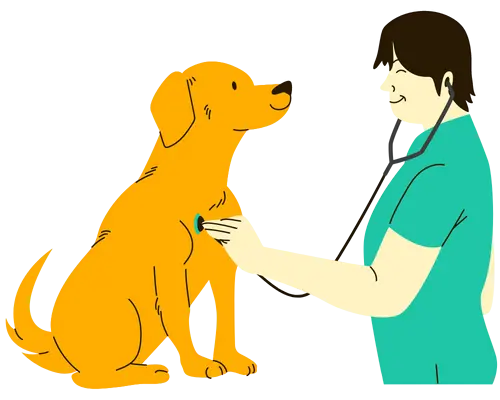
Got something to ask a vet?
Talk to one anytime, 24/7.
* Don’t use this service for emergencies.
Thank you. The rest of the article continues below.
When to Use an Anxiety Wrap
Compression therapy is versatile and can be used for a wide range of common stressors.
- Thunderstorms & Fireworks: The classic use case. Put the wrap on before the noise starts for maximum effectiveness.
- Separation Anxiety: While not a cure, it can help lower the “baseline” anxiety a dog feels when their owner leaves.
- Travel and Vet Visits: If your dog shakes in the car or on the exam table, the wrap provides a sense of security in an unfamiliar environment.
- General Hyper-Arousal: For high-energy dogs that struggle to “turn off,” a 20-minute session in a wrap can signal that it is time to nap.

Frequently Asked Questions
Can my dog wear the wrap all day?
No. Constant pressure can lead to “sensory adaptation,” where the brain starts to ignore the sensation. It is best used for specific stressful events and removed once the dog is calm.
Does it work for every dog?
Success rates are high (roughly 80% for the original ThunderShirt), but every dog is an individual. For some, it is a miracle fix; for others, it may only provide mild relief.
How tight should it be?
It should be “snug like a hug,” but you should still be able to fit two fingers easily underneath the fabric. If it’s too loose, the deep pressure benefits won’t be activated.
📖 Don’t Miss This…
Need more ideas on what to cook for your dog? Then you must check out my library of dog care articles today!
Wrap Up
Anxiety wraps are a safe, non-invasive way to help your dog navigate a world that can sometimes feel too loud or too scary. By understanding the science of compression therapy, you can give your dog a “hug” they can wear, providing them with the emotional support they need to stay calm and grounded.


