Do you know what DOG ESSENTIALS you are missing out? Find out now!



Zack Keithy, our author, is a certified veterinarian technician (UC Blue Ash) for over 6 years (contact him here). The articles written here are based on his expertise and experience, combined with a review by our expert vet reviewers including Dr M. Tarantino. Learn more about us here.
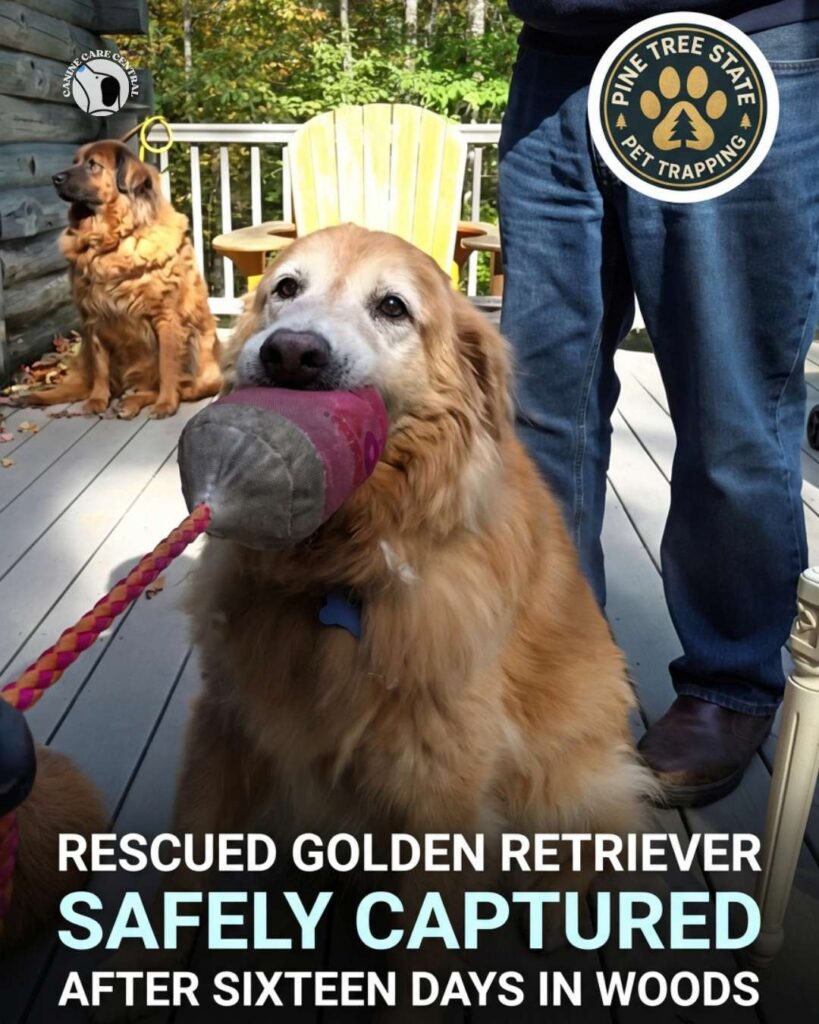
A frightened Golden Retriever rescued from a hoarding case survived 16 days alone in the Maine woods after slipping out of his harness upon arriving at his new home.
Russel Moneva reported on the multi-week search and specialized capture operation on November 18, 2026.
The escape happened on the rural property of mystery author David Rosenfelt and his family in Jefferson, Lincoln County, Maine 04348, United States.
Rosenfelt, who previously helped rescue nearly 4,000 dogs in California before relocating to Maine to care for roughly a dozen special-needs dogs, had just welcomed Clancy alongside two other Golden Retrievers transferred from a Massachusetts rescue.
Originally rescued from a hoarding environment in upstate New York, Clancy remained deeply fearful of human contact.
Moments after arriving at the Jefferson property, the terrified dog slipped free from his harness and bolted into the surrounding forest before Rosenfelt could hold onto him.
For more than two weeks, Rosenfelt distributed missing dog flyers, shared community alerts, and placed regular meals outside while animal control officer Lindsay Smith assisted with search efforts.
Trail cameras revealed that Clancy returned consistently for breakfast and dinner at the feeding station, though he stayed far too skittish to allow anyone near him.
The breakthrough arrived when cardiac nurse and lost-pet specialist Lisa Nazarenko, founder of the nonprofit Pine Tree State Pet Trapping, joined the rescue effort.
Rather than chasing the panicked dog, Nazarenko built a 30-foot-square enclosure equipped with monitoring cameras and an electronically triggered door directly around Clancy’s established feeding area.
Baited with pizza and monitored silently from out of sight, the custom enclosure worked rapidly when Clancy stepped inside to eat and the electronic gate closed safely behind him.
Following his capture after 16 days in the woods, veterinarians sedated Clancy to remove porcupine quills before he woke up safely inside the Rosenfelt home, where he now thrives peacefully alongside the family’s canine pack while his personal boundaries around human touch are patiently respected.
My thoughts:
- Dogs rescued from severe hoarding environments often suffer intense flight responses, making double-leashing and secure fenced transitions vital during initial arrivals.
- Establishing a predictable feeding station monitored by trail cameras anchors lost, fearful dogs to a safe location instead of driving them farther away.
- Specialized lost-pet trappers who use remote electronic enclosures prevent dangerous chases that could push terrified animals toward roadways or wildlife hazards.
- Prompt veterinary sedation and examination after extended time in the woods ensure painful hazards like porcupine quills are safely removed without added trauma.
- Allowing traumatized dogs to build confidence through calm canine pack companions lets them heal at their own pace without forced human handling.
- Dedicated nonprofit trapping specialists and municipal animal control officers provide indispensable expertise when standard search methods cannot reach fearful strays.
Source: Pine Tree State Pet Trapping (Lisa Nazarenko), Jefferson Animal Control (Officer Lindsay Smith), and David Rosenfelt