Do you know what DOG ESSENTIALS you are missing out? Find out now!



Zack Keithy, our author, is a certified veterinarian technician (UC Blue Ash) for over 6 years (contact him here). The articles written here are based on his expertise and experience, combined with a review by our expert vet reviewers including Dr M. Tarantino. Learn more about us here.
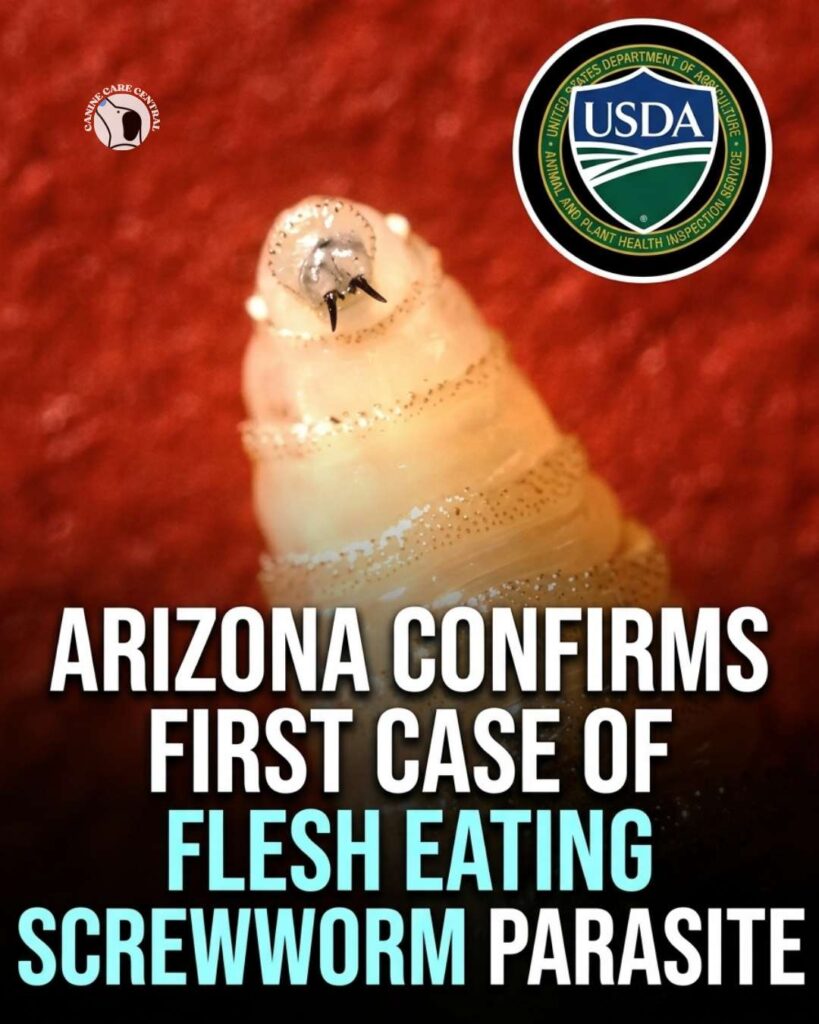
Arizona state and federal agriculture officials have confirmed the state’s first case of New World screwworm in a domestic dog, marking Arizona as the third U.S. state to detect the flesh-eating parasite.
Thao Nguyen reported on the confirmed infestation and federal containment response for USA TODAY on October 29, 2026.
The infestation was detected in Cochise County in southeastern Arizona, near the border with Mexico.
A local veterinarian examined the canine on October 26, 2026, finding a back wound heavily infested with maggots, which scientific testing by the USDA’s Animal and Plant Health Inspection Service later confirmed as New World screwworm.
The infected dog is currently receiving veterinary care, while an epidemiological investigation led by State Veterinarian Dr. Ryan Wolker is underway.
The parasite, which feeds on living tissue in warm-blooded animals, was eradicated from the United States decades ago but has moved northward through Central America and Mexico.
As of October 29, 2026, the USDA has reported 74 animal cases across Texas, New Mexico, and Arizona, including the first U.S. wildlife case identified in a West Texas elk.
In response, officials have established a 12-mile infested zone around the Cochise County detection site, restricted local animal movements, increased fly trapping, and progressed plans for a sterile fly dispersal facility in Douglas, Arizona.
The USDA advises pet and livestock owners to check animals daily for draining or expanding wounds.
My thoughts:
- Border-region parasite surveillance is vital for preventing the re-establishment of flesh-eating pests in North America.
- Swift veterinary reporting and diagnostic testing allow state officials to initiate immediate containment protocols.
- Establishing controlled movement zones around infected areas helps curb the artificial transport of parasitic larvae.
- Deploying sterile insect technique programs provides a non-chemical method to suppress wild fly populations.
- Daily wound inspections by livestock and pet owners serve as an essential first line of early detection.
- Re-emerging agricultural pests present serious economic risks to regional livestock supply chains and trade markets.
Source: USA TODAY (Thao Nguyen), Arizona Department of Agriculture (Dr. Ryan Wolker), and USDA APHIS