Do you know what DOG ESSENTIALS you are missing out? Find out now!


Zack Keithy, our author, is a certified veterinarian technician (UC Blue Ash) for over 6 years (contact him here). The articles written here are based on his expertise and experience, combined with a review by our expert vet reviewers including Dr M. Tarantino. Learn more about us here.
A puppy rescued from a hoarding situation has overcome a life-threatening congenital heart defect and found a permanent home with the Washington State University veterinarian who first took him in as a medical foster.
The young poodle mix, initially named Pepe and now known as Teedee, was one of 38 dogs and puppies rescued this summer from a hoarding case in Benewah County, Idaho, by the Idaho Animal Rescue Network.
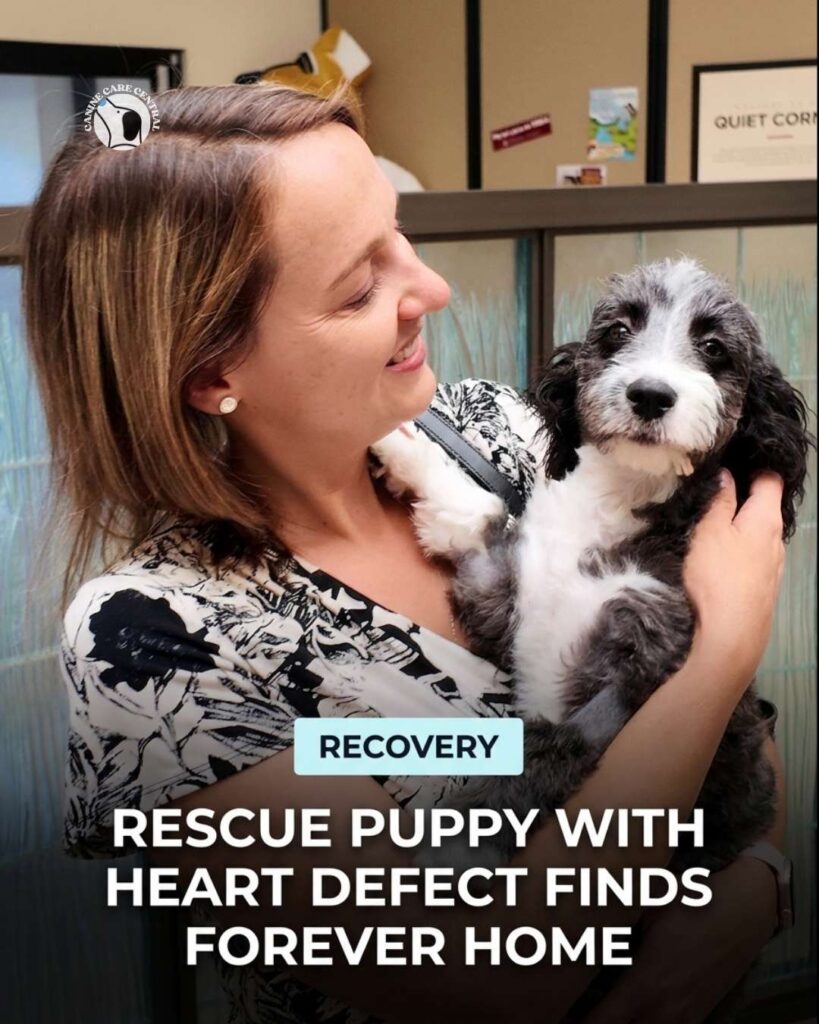
During an initial exam by WSU veterinarians assisting with the case, Dr. Cassidy Cordon detected a heart murmur in Teedee. A follow-up exam confirmed it was patent ductus arteriosus, or PDA, a defect in which a blood vessel needed before birth fails to close properly, forcing the heart to work harder and eventually leading to heart failure if left untreated.
“We initially stuck him in medical foster, aka my house. You never would have known anything was wrong with him,” said Idaho Animal Rescue Network Director Jenna Redheart. Because Teedee needed to stay very still and quiet for 30 days after surgery, the rescue needed a very specific kind of foster placement.
Dr. Laura Williams, a WSU veterinary pathologist, saw a social media post about Teedee’s need for a medical foster not long after losing her own 12-year-old dog, Duke. “He looked so much like Duke. I felt like it was my calling to do it, a way to honor Duke,” Williams said.
Williams was also a strong candidate for practical reasons: she worked at WSU’s Washington Animal Disease Diagnostic Laboratory, a short walk from the Veterinary Teaching Hospital where Teedee’s surgery would take place. He moved in with her a few weeks before the procedure and quickly bonded with her five-year-old dalmatian, Lelu.
Cardiology resident Dr. Sarah Bayles performed the minimally invasive surgery under the supervision of Dr. Ryan Baumwart. The procedure and recovery went smoothly, though keeping an energetic puppy calm afterward proved to be the real challenge.
“The hardest part was keeping him quiet. The next day, if I had let him, he would have been doing zoomies and circles all over,” Williams said. Teedee has since fully recovered and officially joined Williams’ family.
“I’m really thankful to the rescue for saving Teedee and his littermates,” Williams said. “I’m also so glad the PDA was caught by our veterinarians and that we could get that fixed. He’s been thriving ever since.”
My thoughts:
What stands out is how specific the matching process had to be. This wasn’t a general call for any willing foster, it required someone who could manage a 30-day strict recovery, which meant most people simply weren’t candidates no matter how much they wanted to help.
Williams’ own reason for responding adds another layer worth noting. She wasn’t just filling a need, she was processing her own recent loss, and ended up in a position to both honor that and give a vulnerable puppy exactly the kind of careful, attentive foster he needed at the right moment.
Source: WSU Insider, reporting by Devin Rokyta, College of Veterinary Medicine, based on information from Washington State University and the Idaho Animal Rescue Network


