Do you know what DOG ESSENTIALS you are missing out? Find out now!



Zack Keithy, our author, is a certified veterinarian technician (UC Blue Ash) for over 6 years (contact him here). The articles written here are based on his expertise and experience, combined with a review by our expert vet reviewers including Dr M. Tarantino. Learn more about us here.
A new Alabama law establishing statewide standards for tethering and outdoor confinement of dogs takes effect October 1, 2026. The Cherokee County Animal Shelter is urging owners to review their current setups and make any necessary changes before the deadline, and says misinformation has led some residents to believe the law bans tethering outright. It doesn’t; the law, Alabama Senate Bill 361, instead sets specific requirements for how dogs can be tethered, housed, fed, and sheltered outdoors.
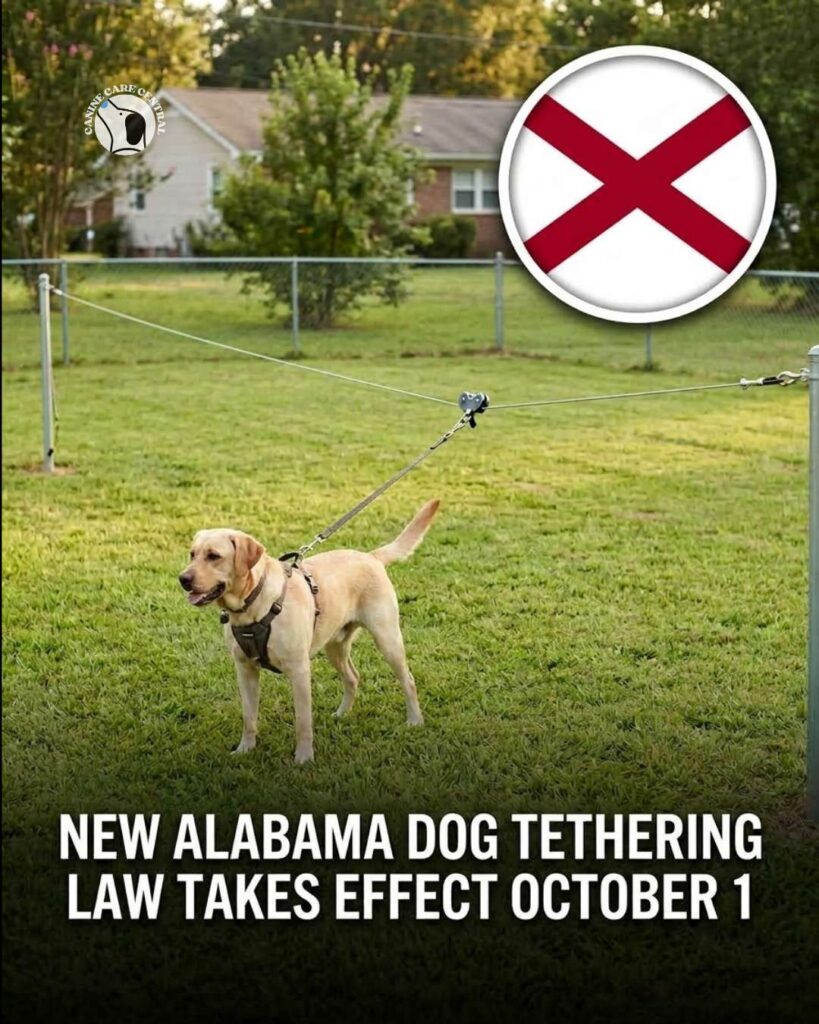
Under the law, dogs tethered to stationary objects like trees, poles, or stakes must be on trolley systems, with only one dog per tether and the tether attached to a properly fitted collar or harness that can’t choke the dog or restrict its breathing. Logging chains, choke collars, and pinch collars are banned for tethering, and swivels are required on both ends to prevent tangling. Tethered dogs must have continuous access to adequate food, water, and legally compliant shelter at all times.
The law also sets standards for outdoor enclosures, which must be secure, fully fenced, and large enough for a dog to move freely, along with shelter requirements covering protection from the elements, a solid floor, proper ventilation, and enough room for a dog to stand, turn around, and lie down normally. Exceptions apply to veterinary practices, boarding kennels, shelters, dog shows, service dogs, grooming facilities, agricultural and hunting dogs, and certain USDA-licensed commercial breeders. Walking a dog on a leash does not count as tethering under the law.
Enforcement falls to certified law enforcement officers, who can remove a dog with probable cause if they believe its life is in danger, while local animal control officers can investigate complaints without holding certified law enforcement status. A first violation is a Class C misdemeanor, a second a Class B misdemeanor, and a third or later violation a Class A misdemeanor, with violators also responsible for the full cost of boarding and veterinary care. The Cherokee County Animal Shelter said its goal is to educate owners and keep dogs safely in their homes rather than increase shelter admissions.
My thoughts: The most useful thing in this one is the shelter’s own clarification that the law isn’t a tethering ban, since that misunderstanding is apparently already spreading. What the law actually does is set a floor, the trolley system requirement, the ban on choke chains and logging chains, the continuous access to food and water, which targets the setups that cause real harm without outlawing tethering as a practice entirely. The shelter flagging a concern about increased admissions if owners don’t prepare is also worth noting, since it suggests they’re trying to get ahead of a problem rather than just publicize the new rule after the fact.
Source: WEIS Radio, reporting by Tony Hathcock, based on information from the Cherokee County Animal Shelter and Alabama Senate Bill 361


