Do you know what DOG ESSENTIALS you are missing out? Find out now!



Zack Keithy, our author, is a certified veterinarian technician (UC Blue Ash) for over 6 years (contact him here). The articles written here are based on his expertise and experience, combined with a review by our expert vet reviewers including Dr M. Tarantino. Learn more about us here.
Rebecca Anderson always suspected her career would somehow involve dogs. She just didn’t expect it to lead to a partnership that would last seven and a half years, span continents, and eventually bring her a decorated bomb-sniffing Belgian Malinois named Boss as a full-time member of her family.
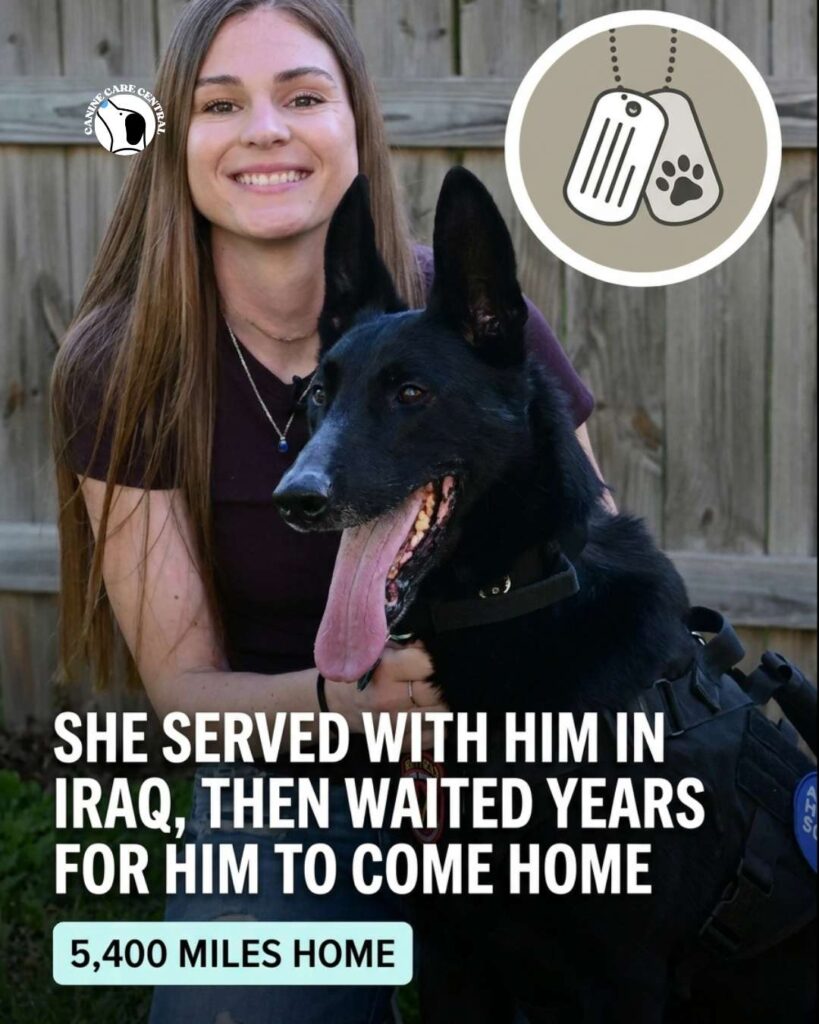
Anderson met Boss as a spinning, restless puppy and went on to serve alongside him as an Army Military Police K9 handler, including a deployment together to Iraq. She’s said having him by her side made the deployment feel far less isolating, knowing he’d be there with her through every part of it. Over the years, their partnership took them well beyond Iraq, with assignments across Greece, Ireland, Paris, New York City, and multiple regions of Italy. In Europe, Boss worked security sweeps ahead of major public events, including Fourth of July celebrations, Oktoberfest, and Christmas festivals, clearing the areas before crowds of service members, military families, and visitors arrived.
When Anderson eventually left the Army, Boss remained overseas on active duty, and the two were separated for the first time in years. She’s described that final goodbye as one of the hardest moments of her service, saying she didn’t want to leave a dog she considered nearly perfect.
Boss officially retired this year after serving as an explosives detection dog and Patrol Explosive Detection Dog Enhanced from 2019 to 2026. Under military policy, a retiring working dog’s most recent handler gets first opportunity to adopt, but the handler is typically responsible for arranging and funding the dog’s transport, a process that can be both logistically complicated and expensive. That’s where the American Humane Society stepped in, helping coordinate Boss’s 5,400-mile journey from Italy to Anderson’s home in Liberty, Missouri.
Their reunion took place on June 14, just ahead of the Fourth of July, the same holiday Boss had spent years helping secure overseas. Anderson called it the longest stretch she’d ever been apart from him, adding that she’d bought supplies for him almost as soon as she got home and had been asking for photo updates constantly in the months leading up to his return. When Boss finally arrived and reached the backyard, six months apart disappeared in an instant, with Anderson in tears as she wrapped her arms around him.
Behind the story: Boss’s reunion highlights a policy gap that surprises a lot of people: even though a retiring military dog’s original handler often gets adoption priority, the government doesn’t automatically cover the cost of getting that dog home, especially when the handler and dog are stationed an ocean apart, as Anderson and Boss were. Nonprofits like the American Humane Society exist specifically to close that gap, covering transport logistics, medical clearance paperwork, and international flight arrangements that individual veterans usually can’t manage or afford on their own. It’s the same infrastructure that’s quietly reunited a growing number of handler-dog pairs in recent years, work that depends almost entirely on public donations and advocacy rather than military budgets.
Original story here.


