Do you know what DOG ESSENTIALS you are missing out? Find out now!


Zack Keithy, our author, is a certified veterinarian technician (UC Blue Ash) for over 6 years (contact him here). The articles written here are based on his expertise and experience, combined with a review by our expert vet reviewers including Dr M. Tarantino. Learn more about us here.
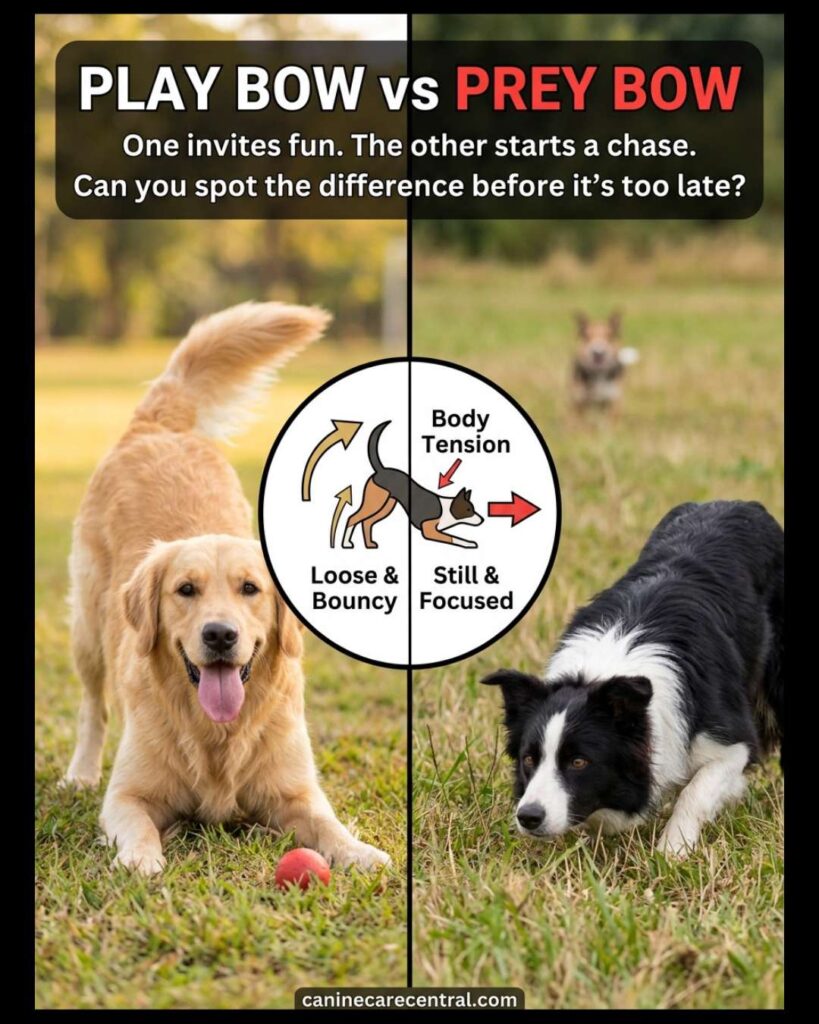
A lowered front-end “bow” does not always mean a dog wants to play. The same posture can signal either friendly intent or predatory focus depending on body tension, movement, and context.
At Canine Care Central, we prioritize bite and chase prevention through clear body language education.
The classic play bow—front legs stretched forward, chest low, rear end up—is widely recognized as an invitation to play.
But a visually similar posture, often called a “prey bow,” can appear just before a chase or grab. Knowing the difference in real time can prevent fights, injuries, and traumatic park incidents.
Medical Questions? Talk to a Veterinarian 24/7.
Connect one-on-one with a licensed vet who will answer your questions in minutes.
*Article may contain affiliate links to retailers like Amazon and Chewy. Learn more on our disclosure page.
The True Play Bow: A Social Invitation
The play bow is a cooperative signal used to say, “Everything I’m about to do is in good fun.”
1. Loose, Bouncy Energy
A true play bow is springy and exaggerated. The dog drops into the bow and pops back up repeatedly, often bouncing side-to-side. The entire body looks soft and wiggly.
2. Relaxed Facial Expression
The mouth is open in a loose “play face,” sometimes with a soft pant. Eyes are relaxed, ears neutral or slightly back, and there is no hard stare.
3. Role Reversal Behavior
Healthy play includes give-and-take. The dog may chase, then be chased, self-handicap (slow down or fall over), and re-bow to keep the interaction going.
Hey there, sorry to interrupt but I wanted to tell you about an online dog training service I’ve been using for years.
Imagine if your dog listened the first time, every time. Picture calm walks, peaceful evenings, and a home where visitors are welcomed, not tackled. The good news? It’s not just a dream. With the right training approach, these changes can happen faster than you think.
And here’s the thing: dog training doesn’t have to be overwhelming or time-consuming.

Click here for proven methods and turn your pup into the best-behaved dog on the block.
INSTANT ACCESSThank you. The rest of the article continues below.
The Prey Bow: A Stalking Setup
A prey bow can look similar at first glance, but the intent is completely different.
1. Stillness and Tension
Instead of bouncing, the dog freezes low to the ground. The body becomes tight and coiled, like a compressed spring. There is no playful movement—only stillness.
2. Locked Target Focus
The dog’s eyes are fixed intensely on a specific target (often a smaller dog). The head stays low, and the gaze does not break.
3. Explosive Launch
Unlike playful back-and-forth motion, the prey bow is followed by a sudden, high-speed forward burst. There is no pause for consent or reciprocal play signals.
Key Differences You Can Spot Instantly
Before assuming a dog is friendly, scan for these critical differences:
- Movement Pattern: Play bows are repetitive and bouncy. Prey bows are still and silent.
- Body Tension: Playful dogs are loose and wiggly. Predatory dogs are stiff and compressed.
- Eye Behavior: Playful dogs glance around and disengage easily. Predatory dogs lock in with tunnel vision.
- Tail Motion: A play bow often includes a loose wag. A prey bow usually has a stiff, high, or completely still tail.
High-Risk Situations to Watch Closely
Certain environments increase the chances of a prey-driven interaction.
- Large Dog + Small Dog: Size mismatches can trigger instinctual chase behavior, especially in herding or hunting breeds.
- Fast-Moving Targets: Small dogs running, squeaking toys, or erratic movement can activate prey drive.
- Overstimulated Dogs: Dogs that are already highly aroused (zoomies, barking, pacing) can flip from play into chase mode quickly.
How to Interrupt a Prey Sequence Safely
If you spot a prey bow forming, act immediately before the chase begins.
- Call Your Dog Early: Use a strong recall cue before the dog launches. Timing is critical.
- Create Physical Interruption: Step between dogs or move your dog away calmly but firmly.
- Leash Reset: Clip the leash on and allow your dog to decompress before reintroducing them to the environment.
📖 Don’t Miss This…
Need more ideas on what to cook for your dog? Then you must check out my library of dog care articles today!
Frequently Asked Questions
Can a play bow turn into a prey chase?
Yes. If arousal levels spike too high, playful behavior can escalate into predatory behavior. This is why supervision and timely interruption are essential.
Are certain breeds more prone to prey bows?
Yes. Breeds with strong prey drive—such as terriers, sighthounds, and herding breeds—are more likely to display stalking behavior, especially toward smaller animals.
Wrap Up
Not every bow is a friendly invitation. A true play bow is loose, bouncy, and cooperative, while a prey bow is still, tense, and focused on a target. Learning to spot the difference in seconds can prevent dangerous chases and keep park interactions safe for every dog involved.


