Do you know what DOG ESSENTIALS you are missing out? Find out now!



Zack Keithy, our author, is a certified veterinarian technician (UC Blue Ash) for over 6 years (contact him here). The articles written here are based on his expertise and experience, combined with a review by our expert vet reviewers including Dr M. Tarantino. Learn more about us here.
Is your dog excessively scratching or having an upset stomach quite often? It’s hard to see them in discomfort, and at times, ordinary dry food may not be enough.
How about making them a really nice homemade dog food recipe which nourishes their gut and makes them happy? This is how you can do it.
Medical Questions? Talk to a Veterinarian 24/7.
Connect one-on-one with a licensed vet who will answer your questions in minutes.
*Article may contain affiliate links to retailers like Amazon and Chewy. Learn more on our disclosure page.
Recipe Overview
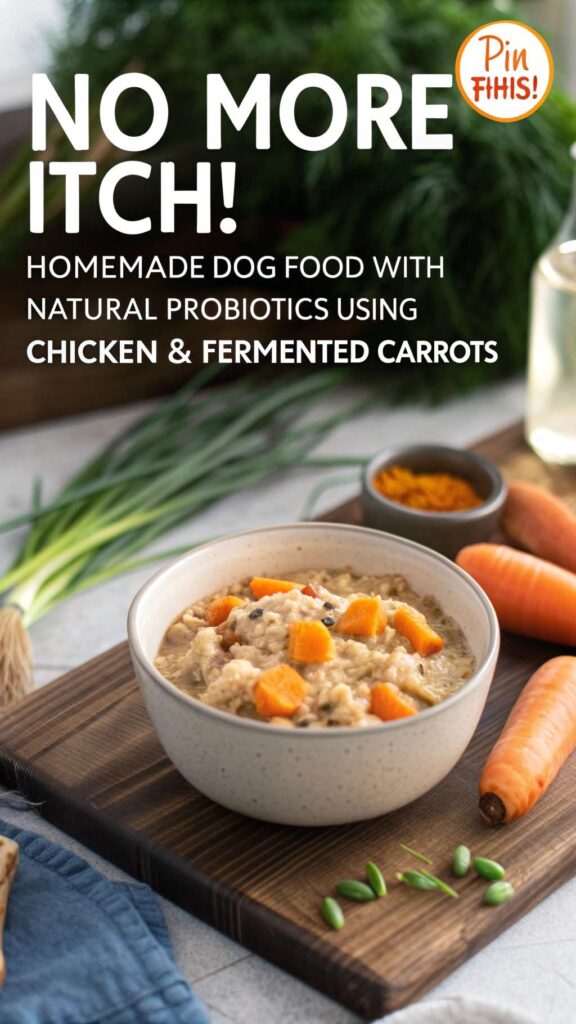
- This homemade dog food recipe combines lean protein with natural probiotics from fermented carrots.
- It’s designed to support a healthy digestive system and boost immunity.
- Prep time: 20 minutes
- Cook time: 35 minutes
- Serving size: Approximately 7-8 cups (enough for 5-7 days for a medium dog)
[lasso ref=”fave” id=”19043″]
Ingredients List
- Ground Chicken (lean, 90/10 or higher): 2 lbs – Estimated Cost: $8.00 – $10.00
- Cooked Brown Rice (or Quinoa): 2 cups – Estimated Cost: $1.50 – $2.50
- Fermented Carrots (finely grated or pureed): 1 cup – Estimated Cost: $2.00 – $3.00 (if homemade, lower)
- Spinach (fresh, chopped): 1 cup – Estimated Cost: $1.00 – $1.50
- Green Beans (steamed, chopped): 1 cup – Estimated Cost: $1.00 – $1.50
- Chicken Broth (low sodium): 1/2 cup – Estimated Cost: $0.50 – $1.00
- Coconut Oil (organic, virgin): 2 tablespoons – Estimated Cost: $0.75 – $1.25
- Eggshell Powder (from 6 eggshells, dried and ground): 1 teaspoon – Estimated Cost: $0.20 – $0.30 (free if you have eggs)
- Nutritional Yeast (fortified): 1 tablespoon – Estimated Cost: $0.50 – $0.75
- Optional: Fish Oil (Omega-3 supplement): 1 teaspoon (or as directed by vet) – Estimated Cost: $0.50 – $1.00 per serving
Total Estimated Cost: $16.00 – $22.00
Substitutions:
- Chicken: You can use ground turkey or lean beef.
- Brown Rice: Quinoa or cooked oats work well if your dog is sensitive to rice.
- Fermented Carrots: Any fermented vegetable (like sauerkraut, plain, no spices) can be used, but carrots are mild and usually well-accepted. Make sure it’s plain and raw.
- Spinach/Green Beans: Sweet potato (cooked and mashed), peas, or pumpkin are good alternatives for vegetables.
Step-by-Step Instructions
- Cook the Ground Chicken: In a large skillet, cook the ground chicken over medium heat.
- Break it up with a spoon as it cooks until it’s no longer pink.
- Drain any excess fat.
- Prepare the Grains: If not already cooked, prepare the brown rice according to package directions.
- Chop Vegetables: While the chicken cooks, finely chop or lightly steam the spinach and green beans.
- Combine Ingredients: In a large bowl, mix the cooked chicken, cooked brown rice, fermented carrots, spinach, and green beans.
- Add Liquids and Supplements: Pour in the low-sodium chicken broth and coconut oil.
- Stir in the eggshell powder and nutritional yeast.
- If using, add the fish oil now.
- Mix Well: Make sure everything is thoroughly combined.
- You want all the nutrients spread out evenly.
- Cool: Let the mixture cool completely before serving or storing.
Look, prepping and cooking for your dog is great, but sometimes you might be too tired or maybe a tad lazy, or maybe you just want to give yourself a well deserved break.

In such times, you want something reliable and nutritious for your dog, and that’s where Ollie comes in. It’s my favorite dog food subscription ever.
Fresh human grade dog food sent to your doorstep, and there’s no lock in.
Give it a shot, will ya?
Feeding Guidelines
- Small Dogs (up to 20 lbs): Feed about 1/2 to 1 cup per day. For example, a Chihuahua might need 1/2 cup, while a Corgi might need 1 cup.
- Medium Dogs (20-50 lbs): Give about 1.5 to 2.5 cups per day. A Border Collie might need 2 cups, while a Springer Spaniel might need 2.5 cups.
- Large Dogs (50-90 lbs): Offer 3 to 4 cups per day. A German Shepherd might need 3.5 cups, a Labrador 4 cups.
- Giant Breeds (over 90 lbs): These dogs might need 4.5 cups or more.
- Activity Level: Active dogs will need more food, while less active or senior dogs might need a bit less to maintain a healthy weight.
- Puppies and Pregnant/Nursing Dogs: These dogs have higher caloric and nutritional needs. Consult your vet to adjust portion sizes and ensure a complete diet, possibly with a vet-approved supplement.
- Always talk to your vet to get personalized feeding advice for your dog’s specific needs, health conditions, and life stage.
[lasso ref=”the-forever-dog-life-120-recipes-longevity-tips-and-new-science-for-better-bowls-and-healthier-homes” id=”18607″]
Nutritional Benefits of the Recipe
- Ground Chicken: This provides high-quality protein, which is essential for muscle growth and repair, immune function, and overall energy. It’s a lean source of amino acids.
- Fermented Carrots: These are packed with natural probiotics, beneficial bacteria that support a healthy gut microbiome. A balanced gut helps with digestion, nutrient absorption, and boosts the immune system. They also offer fiber and vitamins.
- Brown Rice: A great source of complex carbohydrates for sustained energy. It also provides dietary fiber, which aids in healthy digestion and helps maintain regular bowel movements. Quinoa is similar.
- Spinach: Loaded with vitamins A, C, K, and B vitamins, plus minerals like iron and calcium. It supports bone health, vision, and immune function.
- Green Beans: Low in calories and high in fiber, vitamins C and K. They contribute to satiety without adding excess weight and support overall health.
- Coconut Oil: Contains medium-chain triglycerides (MCTs) that can provide a quick energy source and support skin and coat health. It also has antimicrobial properties.
- Eggshell Powder: An excellent natural source of calcium, crucial for strong bones and teeth. It balances the phosphorus in the meat.
- Nutritional Yeast: A good source of B vitamins (like B1, B2, B3, B6, B9) which are vital for metabolism, nerve function, and healthy skin.
- Fish Oil (Optional): Provides Omega-3 fatty acids (EPA and DHA), known for reducing inflammation, supporting brain health, and promoting a shiny coat and healthy skin.

Storage and Serving Tips
- Refrigeration: Store the cooked food in airtight containers in the refrigerator for up to 4-5 days.
- Freezing: For longer storage, portion out the food into freezer-safe bags or containers.
- It can be frozen for up to 2-3 months.
- Thawing: Thaw frozen portions in the refrigerator overnight before serving.
- Reheating: You can serve the food cold, at room temperature, or slightly warmed. If warming, use a microwave or stovetop until it’s just warm, not hot.
- Serving Suggestions: Serve as a stand-alone meal, or mix it with your dog’s regular kibble to transition them or add variety.
Common Questions & Troubleshooting
Can I make a big batch and freeze it?
Yes, absolutely! This recipe is great for meal prepping. Just portion it out into daily servings before freezing, and it will last for up to 2-3 months.
My dog has a sensitive stomach, is this recipe safe?
This recipe is designed to be gentle on the stomach, especially with the fermented carrots for probiotics. But, always introduce new foods slowly and watch for any reactions. Talk to your vet first if your dog has severe sensitivities.
Do I need to add a supplement?
This recipe provides a good range of nutrients. However, for a truly complete and balanced diet long-term, especially for puppies or dogs with specific health needs, a vet-approved canine multivitamin and mineral supplement might be beneficial. Eggshell powder is included for calcium, but a vet can help ensure overall balance.
What if my dog doesn’t like fermented carrots?
You can try starting with a smaller amount and gradually increasing it, or pureeing them into the food so they are less noticeable. If your dog still refuses, a small amount of plain, unsweetened yogurt (with live cultures) could be another way to introduce probiotics, but check with your vet first.
📖 Don’t Miss This…
Need more ideas on what to cook for your dog? Then you must check out my library of homemade dog food recipes today!
Wrapping Up
Making this homemade dog food is a simple way to boost your pup’s health, especially their digestion. It’s packed with goodness and you know exactly what’s in their bowl.
Feeling inspired? Pin this recipe to your Homemade Dog Food board for easy access and follow us for more pet-friendly tips!