Do you know what DOG ESSENTIALS you are missing out? Find out now!



Zack Keithy, our author, is a certified veterinarian technician (UC Blue Ash) for over 6 years (contact him here). The articles written here are based on his expertise and experience, combined with a review by our expert vet reviewers including Dr M. Tarantino. Learn more about us here.
Have you ever seen your dog constantly scratching, biting, or rubbing against the furniture? It is really hard to see our pets suffering from an itchy skin, but the truth is that most commercial foods only worsen the situation by containing artificial ingredients and common allergens.
A lot of dog owners are in this situation where they see their dogs suffering and they don’t know what to do, and they are not even aware of the causes.
What if you could calm their skin and get their wag back with a simple homemade dog food recipe?
Medical Questions? Talk to a Veterinarian 24/7.
Connect one-on-one with a licensed vet who will answer your questions in minutes.
*Article may contain affiliate links to retailers like Amazon and Chewy. Learn more on our disclosure page.
Recipe Overview
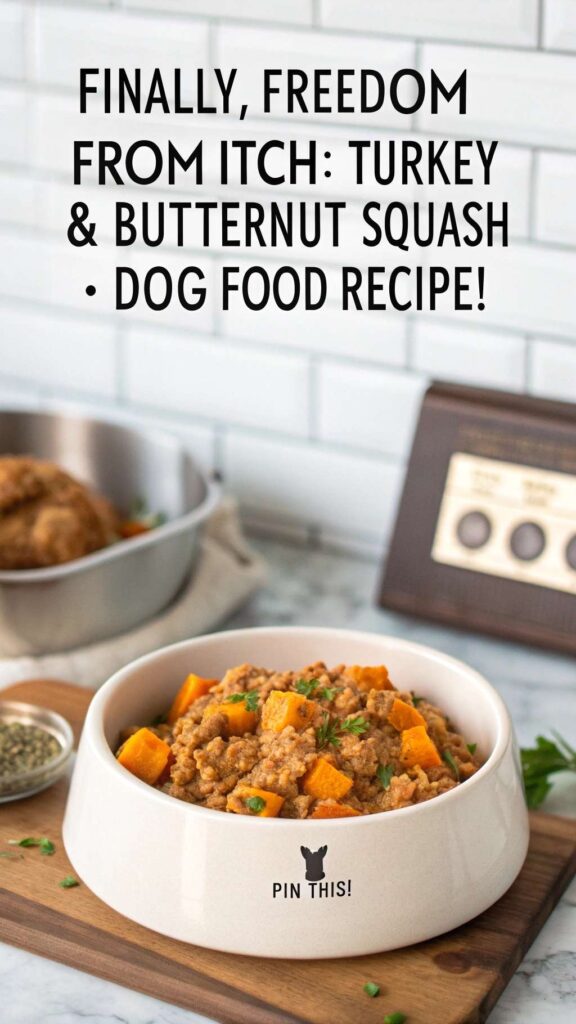
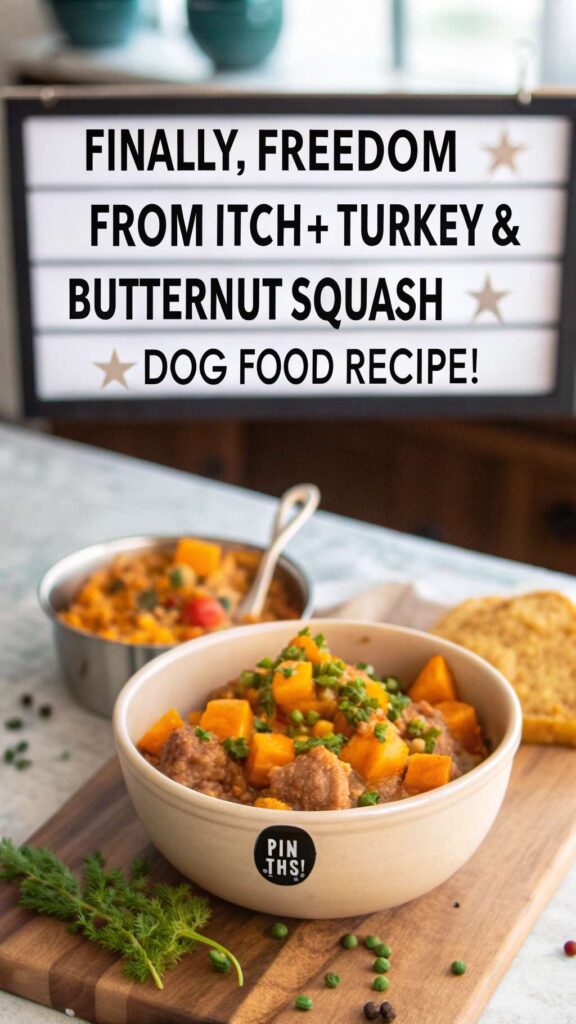
- This homemade dog food recipe is made specifically to help dogs with itchy skin.
- It uses turkey and butternut squash, which are gentle on the digestive system and rich in skin-supporting nutrients.
- Prep time: 20 minutes
- Cook time: 35 minutes
- Serving size: Makes about 6-8 cups (enough for a medium dog for 3-4 days)
[lasso ref=”fave” id=”19043″]
Ingredients List
- 1.5 lbs ground turkey (lean) – $7.00
- 1 medium butternut squash (about 2-3 lbs), peeled, deseeded, and cubed – $3.50
- 1 cup green beans, trimmed and chopped – $1.50
- 1/2 cup cooked quinoa – $0.75
- 1/4 cup bone broth (unsalted, dog-safe) – $1.00
- 1 tbsp coconut oil (unrefined) – $0.50
- 1 tsp turmeric powder (optional, for anti-inflammatory benefits) – $0.25
- 1/2 tsp dried parsley – $0.10
- (Optional) Canine multi-vitamin/mineral supplement – $0.50 per serving estimate
Total Estimated Cost: $15.10 (excluding supplement cost per serving)
Suitable Substitutions:
- Turkey can be replaced with ground chicken or lamb.
- Butternut squash can be swapped for sweet potato or pumpkin.
- Green beans can be swapped for carrots or peas.
Step-by-Step Instructions
- Cook the butternut squash: Steam or boil the cubed butternut squash until it’s very tender. This will take about 15-20 minutes.
- Mash the squash: Once cooked, mash the squash thoroughly. You want it smooth for easier digestion.
- Brown the turkey: In a large skillet, melt the coconut oil over medium heat. Add the ground turkey and cook until it’s fully browned, breaking it up into small pieces.
- Drain excess fat: Once the turkey is cooked, drain any excess fat. This keeps the recipe lean.
- Combine ingredients: Add the mashed butternut squash, chopped green beans, cooked quinoa, bone broth, turmeric, and parsley to the skillet with the turkey.
- Simmer gently: Stir everything together well. Let it simmer on low heat for about 5-7 minutes. This allows the flavors to meld.
- Cool completely: Remove the skillet from heat and let the food cool down completely before serving or storing. It’s important for dog food to be at a safe temperature.
Look, prepping and cooking for your dog is great, but sometimes you might be too tired or maybe a tad lazy, or maybe you just want to give yourself a well deserved break.

In such times, you want something reliable and nutritious for your dog, and that’s where Ollie comes in. It’s my favorite dog food subscription ever.
Fresh human grade dog food sent to your doorstep, and there’s no lock in.
Give it a shot, will ya?
Feeding Guidelines
- Small dogs (under 20 lbs): Feed 1/2 to 1 cup per day, divided into two meals.
- Medium dogs (20-50 lbs): Feed 1.5 to 2.5 cups per day, divided into two meals.
- Large dogs (over 50 lbs): Feed 3 to 4 cups per day, divided into two meals.
- Puppies and active dogs might need more. Pregnant or nursing dogs also have higher calorie needs.
- Always talk to your vet to get a feeding plan tailored for your dog. They can help you figure out the exact portions based on your dog’s specific needs, breed, activity level, and life stage.
[lasso ref=”the-forever-dog-life-120-recipes-longevity-tips-and-new-science-for-better-bowls-and-healthier-homes” id=”18607″]
Nutritional Benefits of the Recipe
- Turkey: This is a lean protein source. It provides essential amino acids for muscle health. It’s also gentle on sensitive stomachs.
- Butternut Squash: Packed with vitamins A and C. These are great for skin health and immunity. It also has fiber for healthy digestion.
- Green Beans: Low in calories and high in vitamins K and C. They add extra fiber.
- Quinoa: A complete protein. It contains all nine essential amino acids. It’s a good source of complex carbohydrates for energy.
- Coconut Oil: Contains medium-chain triglycerides (MCTs). These can help with healthy skin and coat. It also has anti-inflammatory properties.
- Turmeric: A natural anti-inflammatory. It can help reduce itching and skin irritation.
- Parsley: A source of vitamins K and C. It can also freshen breath.

Storage and Serving Tips
- Refrigeration: Store leftover food in an airtight container in the refrigerator for up to 3-4 days.
- Freezing: For longer storage, divide the food into single-serving portions. Freeze in freezer-safe containers or bags for up to 2-3 months.
- Reheating: Thaw frozen portions in the refrigerator overnight. Warm gently on the stove or in the microwave. Make sure it’s not too hot before serving.
- Serving ideas: You can serve this food warm or at room temperature. Some dogs enjoy it mixed with a little bit of their regular kibble. This helps with the transition.
Common Questions & Troubleshooting
Can I add other vegetables to this recipe?
Yes, you can definitely add other dog-safe vegetables. Carrots, peas, spinach, and broccoli are all good choices. Just be sure to cook them thoroughly and avoid any toxic vegetables like onions or garlic.
My dog is a picky eater, how can I introduce this new food?
Start by mixing a small amount of the homemade food with their current food. Gradually increase the proportion of the new food over a week or two. This helps them get used to the taste and texture.
Is this recipe suitable for puppies?
This recipe can be a good base for puppies. But puppies have higher protein and fat needs, along with specific calcium and phosphorus ratios for bone growth. Talk to your vet about adding a puppy-specific supplement to ensure it’s nutritionally complete for their rapid development.
Do I need to add a supplement if I’m feeding this regularly?
Yes, for long-term feeding, it’s a good idea to add a veterinary-approved canine multi-vitamin and mineral supplement. While this recipe is rich in nutrients, it’s hard to achieve complete and balanced nutrition for all life stages without one. Your vet can recommend the best one for your dog.
📖 Don’t Miss This…
Need more ideas on what to cook for your dog? Then you must check out my library of homemade dog food recipes today!
Wrapping Up
Switching to homemade dog food can make a huge difference, especially for dogs with itchy skin. This turkey and butternut squash recipe is simple, nutritious, and tastes great. It’s a loving way to show your pup you care.
Feeling inspired? Pin this recipe to your Homemade Dog Food board for easy access and follow us for more pet-friendly tips!