Do you know what DOG ESSENTIALS you are missing out? Find out now!



Zack Keithy, our author, is a certified veterinarian technician (UC Blue Ash) for over 6 years (contact him here). The articles written here are based on his expertise and experience, combined with a review by our expert vet reviewers including Dr M. Tarantino. Learn more about us here.
It can be really tough if you are a loving pet owner wanting only the best for your furry friend, but the grocery prices are just going up and up.
You feel concerned about what’s actually inside that bag of dry food, yet preparing your pet’s meals at home sounds costly and too complex for you.
The great thing is that you can provide your dog with a nutritious and tasty meal that won’t break your budget and is made at home without any difficulties.
Medical Questions? Talk to a Veterinarian 24/7.
Connect one-on-one with a licensed vet who will answer your questions in minutes.
*Article may contain affiliate links to retailers like Amazon and Chewy. Learn more on our disclosure page.
Recipe Overview
- This homemade dog food recipe is designed to be affordable, nutritious, and easy to make.
- It focuses on lean protein and essential vegetables to support your dog’s overall health.
- It’s especially good for dogs who might be picky eaters or need a boost in their diet.
- Prep Time: 15 minutes
- Cook Time: 30 minutes
- Serving Size: Approximately 6-8 cups (enough for a medium dog for 3-4 days)
[lasso ref=”fave” id=”19043″]
Ingredients List
- Boneless, Skinless Chicken Thighs (about 2 lbs): $7.00 – $9.00. This is a great source of lean protein for muscle health.
- Cauliflower (1 large head): $3.00 – $4.00. Packed with fiber and vitamins, it’s low in calories.
- Brown Rice (1 cup, dry): $0.50 – $0.75. Provides complex carbohydrates for energy.
- Carrots (2 large, or 1 cup chopped): $0.75 – $1.00. Good for vision and a natural source of sweetness.
- Green Beans (1 cup, fresh or frozen): $1.00 – $1.50. High in vitamins K and C, and a good source of fiber.
- Olive Oil (1 tablespoon): $0.10. Helps with nutrient absorption and adds healthy fats.
- Water (4 cups): Free. Essential for cooking and hydration.
Total Estimated Cost: $12.35 – $18.35
Substitutions: You can swap chicken thighs for ground turkey or lean ground beef. If cauliflower isn’t available, broccoli or sweet potato can be good alternatives.

Step-by-Step Instructions
- Step 1: Cook the Rice. In a medium pot, combine 1 cup of brown rice with 2 cups of water. Bring it to a boil, then reduce heat to low, cover, and simmer for about 20-25 minutes until the water is absorbed and the rice is tender. Set it aside.
- Step 2: Prepare the Chicken. Cut the boneless, skinless chicken thighs into 1-inch pieces. You want them small enough for your dog to eat easily. In a large skillet or pot, heat 1 tablespoon of olive oil over medium heat.
- Step 3: Cook the Chicken. Add the chicken pieces to the skillet and cook until they are fully browned and cooked through, usually about 8-10 minutes. Make sure there’s no pink left.
- Step 4: Steam the Vegetables. While the chicken cooks, chop the cauliflower, carrots, and green beans into small, bite-sized pieces. Add 2 cups of water to the pot with the cooked chicken (or use a separate steamer pot). Bring it to a boil, then add the chopped vegetables. Cover and steam for 5-7 minutes until they are tender-crisp.
- Step 5: Combine Ingredients. Once the vegetables are steamed and the chicken is cooked, add the cooked brown rice to the pot with the chicken and vegetables. Stir everything together well.
- Step 6: Cool and Serve. Let the mixture cool completely before serving it to your dog. This is important to prevent burns. You can break down larger pieces of chicken or cauliflower with a fork if needed for smaller dogs.
[lasso ref=”the-forever-dog-life-120-recipes-longevity-tips-and-new-science-for-better-bowls-and-healthier-homes” id=”18607″]
Feeding Guidelines
- Small Dogs (under 20 lbs): Feed about 1/2 to 1 cup per day, split into two meals. A tiny chihuahua might need less, while a small terrier could take more.
- Medium Dogs (20-50 lbs): Offer 1.5 to 2.5 cups per day, divided into two meals. A beagle might need 2 cups, but a more active Border Collie could need 2.5 cups.
- Large Dogs (50-90 lbs): Give 3 to 4 cups per day, split into two meals. A Labrador Retriever might eat 3.5 cups, especially if they are energetic.
- Giant Breeds (over 90 lbs): They might need 4.5 cups or more, depending on their size and activity. Think about a Great Dane needing more than a less active Mastiff.
- Puppies and Nursing Mothers: These dogs have higher caloric needs. You might need to feed them 2-3 times the adult amount, or more frequently. Always check with your vet. The same goes for senior dogs or those with health conditions, as their needs are unique.
- Activity Level: Active dogs will need more food than couch potatoes. Watch your dog’s weight and adjust accordingly. If they’re gaining too much, cut back a bit; if they’re looking thin, add a little extra.
- Veterinary Advice: Always, always talk to your veterinarian before making significant changes to your dog’s diet. They can provide personalized feeding advice based on your dog’s specific health, age, and activity level.
Nutritional Benefits of the Recipe
- Chicken Thighs: These are a fantastic source of protein, which is vital for building and repairing muscles. They also provide essential amino acids and B vitamins.
- Cauliflower: This vegetable is low in calories but high in fiber, which helps with digestion. It also contains vitamins C and K, and antioxidants.
- Brown Rice: A great source of complex carbohydrates, giving your dog sustained energy. It’s also easy to digest and provides some fiber.
- Carrots: Loaded with beta-carotene, which is good for eye health and acts as an antioxidant. They add natural sweetness and crunch.
- Green Beans: Low in calories and fat, but rich in vitamins K, C, and A. They also provide fiber, supporting a healthy digestive system.
- Overall Benefits: This recipe offers a balanced meal with good protein for muscle, healthy carbs for energy, and plenty of fiber for digestion. It’s a great way to avoid artificial ingredients and fillers found in some commercial foods.

Storage and Serving Tips
- Refrigeration: Store any leftover dog food in an airtight container in the refrigerator. It will stay fresh for up to 3-4 days.
- Freezing: For longer storage, divide the cooled food into individual serving portions and place them in freezer-safe bags or containers. It can be frozen for up to 2-3 months.
- Reheating: Thaw frozen portions in the refrigerator overnight. You can warm the food slightly in the microwave for 30-60 seconds or on the stovetop with a splash of water. Make sure it’s not too hot before serving.
- Serving Suggestions: You can serve this food warm, at room temperature, or even chilled if your dog prefers. Some owners like to mix it with their dog’s regular kibble to ease the transition or add variety.
- Transitioning: If your dog isn’t used to homemade food, introduce it gradually. Start by mixing a small amount with their regular food and slowly increase the proportion over several days to avoid an upset stomach.
Common Questions & Troubleshooting
Can I make this recipe in a slow cooker?
Yes, you can! Just add all ingredients (except cooked rice) to your slow cooker. Cook on low for 6-8 hours or high for 3-4 hours. Add the cooked rice at the end and stir well.
Is it okay to add supplements to this food?
Always talk to your vet before adding any supplements. While this recipe is balanced, a vet can advise if your dog needs extra vitamins or minerals, like a calcium supplement for long-term feeding.
My dog has a sensitive stomach, is this recipe safe?
This recipe uses easily digestible ingredients like chicken, brown rice, and gentle vegetables, which are often good for sensitive stomachs. But always introduce new foods slowly and watch for any reactions. If you’re concerned, definitely check with your vet first.
Can I use other vegetables?
Absolutely! You can use dog-safe vegetables like spinach, zucchini, pumpkin, or peas. Avoid onions, garlic, grapes, and raisins, as these are toxic to dogs.
How can I make sure my dog gets all necessary nutrients?
While this recipe is wholesome, feeding homemade food long-term requires careful attention to balance. Consider rotating ingredients or discussing with your vet if a veterinary-formulated supplement is needed to ensure complete nutrition.
📖 Don’t Miss This…
Need more ideas on what to cook for your dog? Then you must check out my library of homemade dog food recipes today!
Wrapping Up
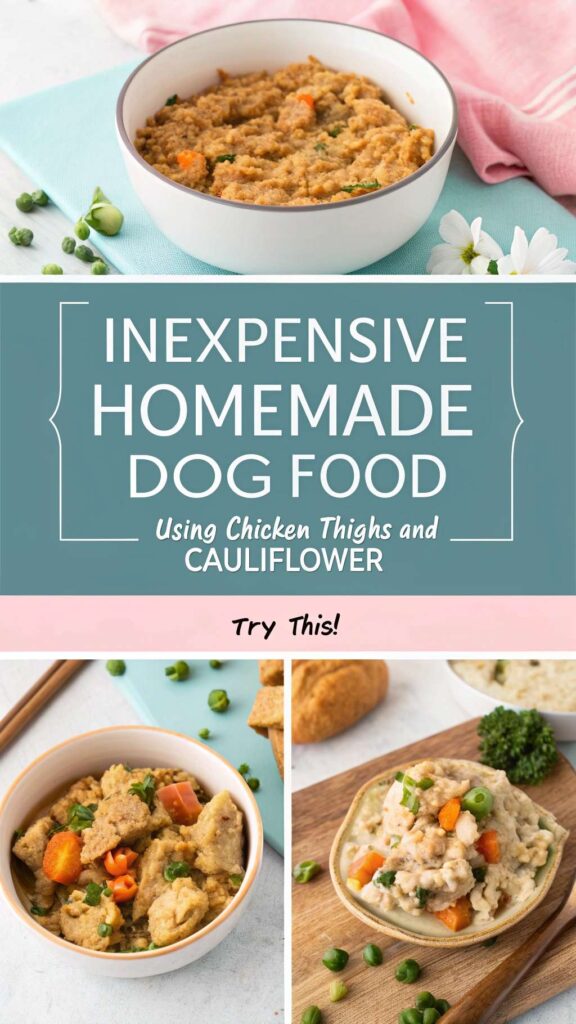
Making your dog’s food at home doesn’t have to break the bank, and this chicken and cauliflower recipe proves it. It’s simple, affordable, and full of goodness your dog will love.
Feeling inspired? Pin this recipe to your Homemade Dog Food board for easy access and follow us for more pet-friendly tips!